The New Delhi summit showed the group is becoming more practical: from trade and payment systems to transport and strategic autonomy
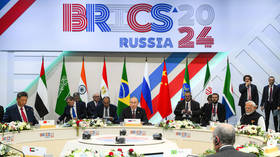
The 18th BRICS Summit in New Delhi took place at a moment when the group is clearly outgrowing its original format as a club of several major emerging economies and gradually becoming a platform capable of shaping debates over global trade, international finance and the political architecture of the world order.
The countries gathered around the same table have very different relations with the West, compete with one another in a number of areas and yet increasingly share an interest in expanding their strategic autonomy. For Russia, this is especially important, because BRICS gives Moscow an opportunity to deepen economic ties with the largest non-Western powers, develop settlement mechanisms less vulnerable to sanctions and demonstrate that attempts to politically isolate the country have not kept it from engaging in high-level international diplomacy.
It was against this backdrop that Russian President Vladimir Putin articulated Moscow’s interpretation of the changes now taking place in the global system, saying in New Delhi that the world is undergoing “profound, fundamental shifts” as new centers of economic growth increasingly replace the old ones.
According to the Russian president, BRICS countries have accounted for more than 40 percent of global GDP growth over the past five years, compared with around 29 percent for the G7, a trend Moscow sees as evidence that the redistribution of economic power is already taking place regardless of political declarations. Putin went further by describing BRICS as a “new and sustainable platform for global growth”, while stressing that the rules governing such a system should not be imposed on its participants from outside. For Russia, this principle is central to the entire concept of a multipolar order.
Only a few years ago, discussions about BRICS were often dominated by symbolism and general calls for reform of the global order, whereas the agenda today increasingly revolves around payment systems, national currencies, transport corridors, technology, the New Development Bank and more resilient industrial supply chains. Multipolarity is only strategically meaningful for Moscow when it is supported by practical alternatives in trade, finance, logistics and investment.

Russia and India are building bridges and roads
The most important bilateral meeting for Vladimir Putin in New Delhi was his discussion with Indian Prime Minister Narendra Modi, which covered politics, trade, defense, energy, space cooperation, labor mobility and broader humanitarian ties. The two sides reaffirmed their intention to expand bilateral trade and retained the target of reaching $100 billion in turnover by 2030, while the first INNOPROM India exhibition, which took place in New Delhi right before the BRICS summit, provided an additional signal of the growing industrial dimension of the relationship. Putin and Modi visited the exhibition together, underlining both countries’ interest in moving beyond a model centred primarily on oil, arms and nuclear energy. For Moscow, the strategic objective is increasingly to broaden cooperation into manufacturing, technology, critical minerals and joint industrial projects.
Putin himself placed particular emphasis on this agenda during the BRICS Business Forum, saying that Russia remains open to cooperation with the wider world and is prepared to work with its partners to strengthen energy and food security. He also highlighted the importance of reliable transport routes, including the International North-South Transport Corridor and the Trans-Arctic Transport Corridor, which reveals the practical side of Russia’s strategy. Moscow is not interested merely in selling more goods to India, but in building a transport and payment architecture in which Russian-Indian trade is less dependent on shipping routes, banks and intermediaries that may become subject to external political pressure.
The North-South Corridor links Russia with the Caspian region, Iran, the Indian Ocean and the Indian market, making it a physical expression of the multipolarity promoted by BRICS leaders. The more such routes exist alongside traditional Western-dominated channels, the less global trade depends on a limited number of financial and logistical centers. Russia’s growing focus on India is not an attempt to replace one external market with another, but a strategy of diversification in which economic relations are distributed among several major centers of power.
No dramatic de-dollarization
The New Delhi declaration supported the wider use of national currencies in trade and investment, greater interoperability between payment systems and a stronger role for the New Development Bank, while the idea of immediately creating a single BRICS currency remained outside the core agenda. The group’s members have very different economies and monetary systems, but nevertheless share an interest in ensuring that international trade is not dependent on a single financial channel.
For Russia, this issue has become particularly important following the unprecedented expansion of sanctions, because financial autonomy in Moscow is no longer treated as an abstract policy debate but as an element of national economic security.
Even before the summit, the Kremlin said that around 90 percent of Russia’s settlements with BRICS countries were already conducted in national currencies, while Dmitry Peskov stressed that Moscow was not pursuing “de-dollarization” as an end in itself but rather seeking a wider range of acceptable payment mechanisms. The idea is to ensure that access to international trade cannot be cut off by a single political decision.
Putin linked this argument to the wider problem of global economic competition, warning that it was increasingly taking “unseemly forms” through sanctions, restrictions and pressure on infrastructure. At the same time, he argued that economic rules within BRICS should reflect the national interests of its members and be driven by technology, investment and private initiative.
Russian interests shine in sideline diplomacy
The density of Vladimir Putin’s diplomatic contacts in New Delhi was no less revealing, because in addition to the main summit sessions he held a series of bilateral meetings with leaders from Asia and Africa. Following his talks with Modi, Putin met South African President Cyril Ramaphosa and noted that relations between the two countries were “developing successfully,” pointing to sustained political dialogue, interparliamentary ties and cooperation in education. For Moscow, South Africa remains an important partner not only as one of Africa’s leading economies but also as a state through which Russia maintains a voice in the debate about the continent’s role in the emerging international system.
Putin also held separate talks with Malaysian Prime Minister Anwar Ibrahim, a meeting with clear strategic value as Moscow seeks to expand its presence in Southeast Asia and connect bilateral relations with ASEAN states to the broader BRICS framework. The Russian president also met New Development Bank President Dilma Rousseff, who described Russia’s participation as important for strengthening both the bank itself and the Global South, giving Moscow an opportunity to discuss its position within one of the group’s most important financial institutions. In addition, Putin met Ethiopian Prime Minister Abiy Ahmed, further reinforcing Russia’s effort to deepen its political and economic engagement across Africa and illustrating just how geographically broad the BRICS diplomatic network has become.
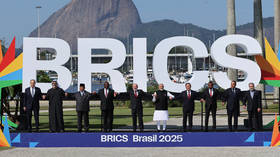
These contacts help explain why BRICS enlargement has value for Moscow in its own right, even though new participants are under no obligation to support Russia’s position on every international issue. Malaysia, India, South Africa, Ethiopia, the United Arab Emirates and Brazil all maintain their own relationships with the US and Western European nations, while at the same time remaining interested in Russian energy, technology, food, investment or political dialogue. For Moscow, this flexible model is far more important than rigid bloc discipline, because cooperation is built around overlapping interests rather than ideological loyalty.
It is also significant that Putin used the summit to advance the argument for reforming existing international institutions, calling for the broader representation of Asian, African and Latin American countries in the UN Security Council. The Russian president also spoke in favor of increasing the role of developing economies in the International Monetary Fund, the World Bank and the World Trade Organization, linking institutional reform to changes in the real balance of global economic power. In this area, Russia’s position overlaps directly with India’s long-standing demand that international institutions better reflect the demographic and economic realities of the 21st century.
BRICS is evolving from a slogan into a mechanism
One of the most important political results of the summit was the ability of the expanded BRICS to adopt a joint declaration despite serious internal differences and ongoing conflicts in the Middle East and Ukraine. Particularly striking was the fact that countries with sharply different regional interests were nevertheless able to endorse common language calling for restraint, diplomatic solutions and opposition to unilateral coercive measures. The very existence of such a consensus among states with such different foreign-policy orientations suggests that BRICS is beginning to function as a platform where disagreements do not disappear, but no longer automatically preclude cooperation.
Putin described the unipolar model of international relations as something that is gradually passing into history and argued that BRICS is already emerging as one of the centers of global governance. This assessment clearly reflects the Russian view of the international system, but it also rests on an objective foundation, because the expanded grouping represents an enormous share of the world’s population, controls major energy, industrial and raw material resources, and includes several of the fastest-growing large economies. The central question is no longer whether BRICS can symbolically demonstrate a changing global balance, but whether it can translate that weight into durable financial, transport, industrial and technological institutions.
For Russia, the New Delhi summit was positive on several levels: Moscow strengthened its strategic dialogue with India, advanced the agenda of transport corridors and national settlement mechanisms, discussed the future role of the New Development Bank and held a broad series of talks with its Asian and African partners. At the same time, Russian proposals concerning reform of global governance became part of a much wider debate supported not only by Moscow but also by India, China, South Africa and many other countries of the Global South. This all goes to show that BRICS is not a project built solely around Russia’s confrontation with the West.
Its idea is not that one center of global power will simply be replaced by another, because such a substitution would hardly make the international system more just. Instead, a new order is gradually emerging, in which states have more than one creditor, more than one payment mechanism, more than one transport corridor and more than one political platform capable of influencing global decisions. In this sense, BRICS is bringing the world closer to a new and fairer international order, not by dismantling existing institutions overnight but by gradually reducing the ability of any single group of countries to claim an exclusive right to set the rules for everyone else.
The New Delhi summit does not complete this transition and does not eliminate the many contradictions within BRICS itself, but it does show that multipolarity is beginning to move beyond political rhetoric.