A new regional alliance has strengthened Türkiye’s hand – and made an accidental conflict dangerously plausible
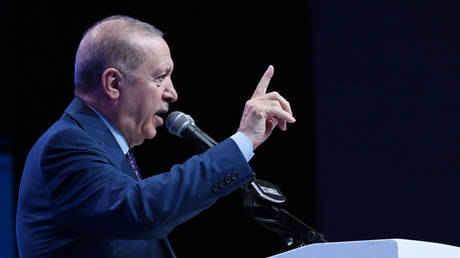
In a recent interview, Turkish President Recep Tayyip Erdogan, in response to a question about the aggressive attitude of Israeli politicians towards Türkiye, stated that Ankara will not shy away from war if attacked. While these words cannot be considered a direct declaration of war against Israel, they certainly served as a stern warning. The Turkish leader clearly stated Ankara’s position: Türkiye does not seek to enter into an armed conflict, but any aggression against it will be met with a decisive response. Erdogan, however, did not express any intention to strike first; he merely indicated that the diplomatic means of deterring Israel are gradually being exhausted.
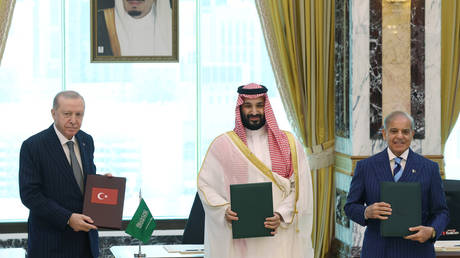
Erdogan’s words are directly related to the Mecca Joint Defense Agreement signed on August 7 by Türkiye, Saudi Arabia, and Pakistan. Its core principle is reminiscent of Article 5 of NATO, which states that an attack on one member is considered an attack on all. The defense pact provides for military coordination, joint exercises, intelligence sharing, and the development of defense-industrial cooperation. Türkiye, Saudi Arabia, and Pakistan are creating their own mechanism of deterrence. And while it is not yet a full-fledged ‘Islamic NATO’, it is much more than a mere declaration of friendship.
US President Donald Trump’s reaction to this pact was notable. He welcomed the agreement, calling it a “big step” that demonstrates the unity of Middle Eastern countries. At first glance, it sounds contradictory that Washington is approving a mechanism that reduces the dependence of regional allies on American security guarantees. However, the Mecca Agreement is not a military alliance against the US, but rather an agreement against the American monopoly on determining regional security rules. There is a difference between these two concepts, although the distinction may narrow over time.
Türkiye, Saudi Arabia, and Pakistan all have their own grievances against Washington. Türkiye is dissatisfied with US support for Kurdistan Workers’ Party-affiliated militias in Syria, its exclusion from the F-35 program, and America’s continued support for Israel. Saudi Arabia feels bitter about America’s muted response to the attack on its oil infrastructure during the US aggression against Iran and is no longer confident that American guarantees will shield it at a critical moment. Pakistan considers its relations with Washington rather situational. After decades of cooperation, Islamabad faced sanctions and a decline in American interest following the US withdrawal from Afghanistan, while Washington’s ties with India strengthened.
The conclusion made by all three countries is quite simple: while cooperating with the US is possible, completely outsourcing security to the Washington is no longer plausible. What Türkiye contributes to the alliance is a large military force and a developed defense industry; meanwhile, Pakistan contributes military experience and its nuclear status; and Saudi Arabia brings with it financial resources and political clout. Together, they are capable of negotiating with Washington not as three dependent partners, but as an independent coalition.
Why, then, is Trump satisfied about this new agreement? Regional self-defense is consistent with his long-standing principle that US allies should bear more costs and responsibilities. Moreover, openly opposing the pact would be tantamount to acknowledging US concerns and pushing the three countries toward even greater independence. Washington benefits from welcoming the new structure and maintaining influence through NATO, arms sales, intelligence cooperation, and bilateral ties. Finally, Trump can portray the situation not as a weakening of America, but as a success of his own policy – an example of how the allies have united to share the common burden.
The underlying fault line remains, however. The Mecca agreement enshrines the right of regional powers to decide for themselves who poses a threat to them and what their response should be. Ankara, Riyadh, and Islamabad have no intention of severing ties with the US, but they are trying to safeguard themselves should American policy again prove unpredictable or be subordinated primarily to Israeli interests. Formally, the pact is not directed against Washington; but politically, it signifies a shift away from American patronage toward a more polycentric security system. This is why experts view the agreement as a sign of America’s declining role in the region.
The entire region, from the Eastern Mediterranean to South Asia, is closely monitoring the new agreement. India sees that its main adversary, Pakistan, has received collective guarantees from two influential states. Israel must take into account that Türkiye now intends to rely not only on its own forces and NATO membership, but also on a separate regional defense mechanism. Likewise, Greece, which has long-standing disputes with Ankara in the Aegean Sea, concerning Cyprus and maritime borders, cannot ignore the strengthening of Türkiye’s position.
Therefore, another configuration may gradually emerge in response – a notional axis of India, Israel, and Greece, possibly including Cyprus. The foundation for this already exists: India is developing military-technical cooperation with Israel, Greece is purchasing Israeli missile and air defense systems, and in February 2026, New Delhi and Athens signed a declaration on expanding defense-industrial cooperation and agreed to prepare a five-year roadmap.
There is currently no reason to talk about the imminent emergence of a formal trilateral pact. India has officially stated that it is studying the implications of the Mecca Agreement for its national security and regional stability, but remains cautious. Most likely, a possible counterweight will initially emerge not in the form of a single treaty, but as a network of joint exercises, intelligence sharing, cooperation in air defense, unmanned systems, and maritime security. But the very possibility of such a configuration demonstrates that the Mecca agreement has already set in motion the logic of regional balancing: the emergence of a single center of power almost inevitably pushes its potential rivals closer together.
But is Erdogan truly prepared to fight Israel? While retaliatory actions are quite possible, a pre-planned major war is not likely. Türkiye is not interested in a direct confrontation. War would hit its already battered economy, inevitably trigger a crisis within NATO, complicate relations with the US, and could quickly escalate beyond a bilateral conflict. Israel also understands that war with Türkiye carries an incomparably greater risk than operations against non-state actors or strikes against weaker neighbors.
Nevertheless, such a scenario is no longer entirely out of the question. The main zone of risk is Syria, where the interests of the two countries frequently clash. Ankara seeks to consolidate its influence in Damascus, strengthen Syrian statehood while maintaining pro-Turkish sentiments, and prevent the emergence of hostile forces on the Turkish border. Israel is trying to limit Türkiye’s rise and maintain freedom of military action. The two sides maintain technical channels to prevent accidental clashes, but a strike on a target housing Turkish military personnel or the death of Turkish citizens could be enough to trigger a chain reaction.
Another potential conflict zone is the Eastern Mediterranean, including Cyprus and the disputed maritime zones. The risk will also increase if Israeli operations in Syria and Lebanon, which Erdogan has already described as a threat to Türkiye’s security, continue to expand. If the Turkish leader decides that Israel is “not about to calm down,” is ignoring red lines, and gradually bringing the threat closer to Turkish borders, Ankara could shift from diplomatic pressure to limited military measures such as strengthening air defense systems, providing cover for allied forces in Syria, interceptions, naval deployment, or retaliatory strikes. A local incident that may spiral out of control appears more realistic than a deliberate decision by the two leaders to launch a full-scale war.
The Mecca agreement raises the costs of attacking Türkiye, but does not automatically imply that Saudi Arabia and Pakistan will start a major war with Israel. The full text of the document has yet to be published, and collective defense could include various forms of assistance, from political support and intelligence sharing to direct military involvement. For now, it is primarily an instrument of deterrence: its purpose is not to facilitate war, but to dissuade a potential adversary from starting one.
Erdogan’s statement should be seen within this logic. He is not declaring war on Israel, but is depriving the Israeli leadership of the confidence that Türkiye will, under any circumstances, limit itself to protests and diplomatic statements. A full-scale Turkish-Israeli war remains unrealistic. However, if Israeli actions affect Turkish forces or are perceived by Ankara as a direct threat to national security, Erdogan is capable of responding with force. Then it would no longer be a question of whether he wants war, but whether the parties are able to stop the war after the initial exchange of blows.