Voters will elect a new parliament after a campaign shaped by a housing crisis, mass protests, immigration, and foreign policy disputes
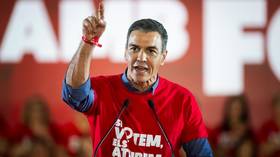
Spain is set to hold a snap general election on Sunday after months of social unrest and political turmoil, with Socialist Prime Minister Pedro Sanchez’s eight-year tenure on the line.
A worsening housing crisis, rising living costs, tensions over immigration, and disputes over military spending and foreign policy have dominated the campaign.
What are Spaniards voting for?
Voters will elect all 350 members of the Congress of Deputies, the lower house of parliament, and renew the elected portion of the Senate.
The prime minister is not directly elected. A candidate must secure the backing of an absolute majority of 176 deputies in an initial parliamentary vote or a simple majority in a subsequent round.
The conservative People’s Party (PP) won the most seats in the 2023 election but failed to form a government. Sanchez retained power by forming a coalition with the left-wing Sumar alliance and securing the backing of regional lawmakers.
Why did Sanchez call an early election?
The prime minister announced the November 29 election after parliament rejected two housing reform decrees on October 2.
The defeat exposed his minority government’s fragility. The Catalan separatist party Junts, whose support had been crucial to keeping Sanchez in power, sided with the opposition.
His Socialist administration has also faced mounting pressure from corruption investigations involving former senior party officials, including former Transport Minister Jose Luis Abalos and former party organizational secretary Santos Cerdan.
Who is competing for power?
The main challenger to Sanchez’s Spanish Socialist Workers’ Party (PSOE) is the PP, led by Alberto Nunez Feijoo. The nationalist Vox party, headed by Santiago Abascal, has gained ground in opinion polls since the previous election.
Other contenders include the left-wing Frente Amplio coalition led by former Barcelona Mayor Ada Colau, Podemos, and several Catalan and Basque parties.
The final polling average compiled by El Pais before the pre-election polling blackout put the PP at 31.5%, followed by the Socialists at 29% and Vox at 17.9%.
How severe is Spain’s housing crisis?
Despite Spain’s economy growing faster than most of its European peers, housing costs have outpaced wages. Inflation-adjusted property prices rose by 43% between 2015 and 2025, compared with 25% across the EU. The country faces an estimated shortage of 750,000 homes.
The crisis drew renewed attention in September when 87-year-old Madrid resident Maricarmen Abascal was evicted from the apartment where she had lived for 71 years following a lengthy legal dispute. Her monthly rent was around €500 ($549), while the landlord was demanding €2,650.
Although a subsequent agreement allowed Abascal to return home, she died in a hospital on October 7.
The Socialists have advocated rent regulation and an expansion of public housing, while the PP has pledged to facilitate the construction of one million homes. Both the conservatives and Vox want to repeal the existing housing law.
What has fueled public discontent?
Soaring rents and living costs have sparked mass demonstrations across Spain.
On November 11, the country saw its first general strike in 14 years, with trade unions demanding affordable housing, higher wages, and better working conditions. Clashes between protesters and police resulted in dozens of arrests.
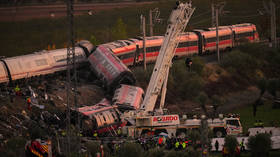
Two major railway disasters this year have added to the pressure on the government. A high-speed train collision near Urda in central Spain killed 69 people on October 28, following a crash near Adamuz in January that claimed 46 lives.
The latest tragedy triggered protests outside the Transport Ministry in Madrid. Vox blamed Sanchez, while Frente Amplio demanded political accountability. Transport Minister Oscar Puente resigned on November 3.
How has the migrant crisis affected Spain?
Immigration is another major election issue, due in no small part to an unprecedented influx of migrants into Ceuta, a Spanish enclave on the North African coast that shares a land border with Morocco.
Around 100,000 people entered the city on July 30 and 31, according to the regional authorities. They included thousands of unaccompanied minors, placing severe pressure on local facilities.
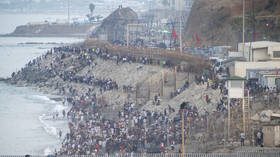
While most have since left, more than 15,000 remain, according to Ceuta President Juan Jesus Vivas, who has accused Sanchez of deliberately failing to prevent the influx.
The crisis also exposed divisions within the EU over immigration policy. Several European leaders, including Italian Prime Minister Giorgia Meloni, called for Spain’s suspension from the bloc’s passport-free Schengen area. Rome temporarily reinstated border checks on travelers arriving from Spain, prompting Madrid to impose reciprocal measures. Both countries lifted the restrictions in October.
Vox has called for stricter immigration controls and priority for Spanish nationals in accessing public assistance.
How divisive are NATO and military spending?
Spain, a NATO member since 1982, has been one of the most outspoken opponents of Washington’s push for higher defense spending across the military bloc.
Sanchez rejected a new target of 5% of GDP by 2035 as “unreasonable,” insisting that Madrid could meet its commitments by allocating 2.1%. He said he had secured an exemption at last year’s NATO summit in The Hague, although Secretary General Mark Rutte disputed that claim.
US President Donald Trump later suggested expelling Spain from NATO and threatened to impose tariffs on the country. Sanchez reiterated his opposition to the spending target at the bloc’s July summit in Ankara.
The US-Israeli war against Iran has further strained bilateral relations. Madrid has consistently refused to allow American forces to use its military bases or airspace for offensive operations against the Islamic republic. Trump has also threatened to sever trade with Spain.
On Tuesday, Sanchez pledged to amend the country’s defense law to prohibit Spain from participating in illegal wars, comparing the ongoing campaign against Iran to the US-led invasion of Iraq in 2003.
Sanchez has been a vocal critic of US ally Israel, describing its military campaign in Gaza as genocide. Spain formally recognized Palestinian statehood in 2024, drawing condemnation from Israel.
The opposition remains divided over defense and foreign policy. The PP has pledged to strengthen ties with Washington and increase military investment to meet NATO commitments. Vox favors higher defense spending, while Frente Amplio advocates cuts and Podemos wants Spain to leave the bloc.
Would a new government change support for Ukraine?

Spain is among the EU countries that have provided military assistance to Kiev since the Ukraine conflict escalated in 2022. The bloc and its member states have furnished nearly €100 billion in military support, according to the European Council.
Madrid has supplied military equipment and trained more than 9,000 Ukrainian troops. In March, Sanchez announced a further €1 billion in military aid for 2026, bringing Spain’s total commitments to nearly €3.8 billion. The package includes joint weapons production.
The PP has pledged to maintain political, economic, military, and humanitarian assistance to Kiev, as well as sanctions against Russia. Podemos, by contrast, advocates a negotiated settlement and a European security system based on disarmament and cooperation.
When will the election results be known?
Nearly 38.7 million Spaniards are eligible to vote, including around 2.8 million living abroad.
Polling stations will open at 9 AM and close at 8 PM local time on Sunday. Voting in the Canary Islands will end an hour after polls close on the mainland.
Preliminary results are expected on Sunday evening. The newly elected parliament is scheduled to convene on December 23.