The first direct Iran-Israel war ended an era of shadow conflict and opened a far more uncertain chapter
Exactly one year ago, on June 13, 2025, the world entered a new reality.
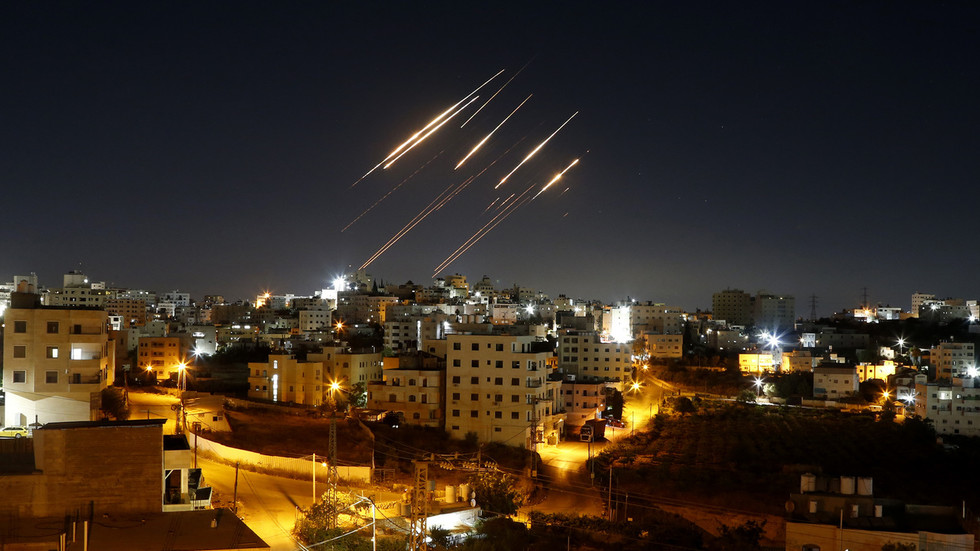
A new chapter was opened in the history of the Middle East, in the history of Iran, and in the long-running confrontation between Iran and Israel. What had spent decades unfolding as a covert, hybrid, and indirect struggle suddenly took the form of a direct military confrontation.
Until that moment, the conflict between Iran and Israel had followed a different pattern. It was largely a shadow war – a contest fought through intelligence operations, cyberattacks, strikes on strategic assets and allied forces, proxy networks, diplomatic pressure, sanctions, mutual threats, and occasional missile exchanges. For years, both sides had avoided crossing the threshold into full-scale open warfare, preferring limited operations, regional partners, and carefully calibrated actions.
That balance was shattered on June 13, 2025. Israel effectively moved the conflict into a new phase. From that point forward, this was no longer another episode in a cycle of regional tensions. It became a direct attack on Iran as a state. That is why the June 2025 war marked a historic turning point: for the first time, a confrontation that had largely existed in a covert and limited form evolved into an open military conflict between two of the Middle East’s most influential powers.

The road to war: Decades of hostility and escalating pressure
The Iran-Israel rivalry did not emerge overnight. Its roots stretch back decades, shaped by political, ideological, and strategic antagonism.
For Israel, Iran had long been viewed as its most significant regional adversary – one capable of altering the balance of power across the Middle East. For Iran, meanwhile, Israel was not merely an opponent but part of a broader system of pressure linked to the United States, Western sanctions, and efforts to constrain Tehran’s strategic autonomy.
At the center of this rivalry stood Iran’s nuclear program.
For years, it served as a focal point for suspicion, threats, and diplomatic crises. Israel and Western governments argued that Iran could eventually move toward developing nuclear weapons. Tehran consistently maintained that its program was peaceful and intended for energy production, scientific research, and technological development. Between these competing narratives emerged a permanent zone of political pressure, where every report, inspection, and public statement became not only a technical matter but also a political weapon.
When Israel experienced the trauma of October 6–7, 2023, and responsibility was placed on Hamas, it became clear that the region was entering a new phase of instability.
Some Israeli politicians and analysts described Hamas as an Iranian proxy. Yet such a characterization oversimplifies – and fundamentally misrepresents – the nature of the Palestinian movement. Hamas has never been a direct instrument of Tehran. It possesses its own political logic, social base, objectives, and historical trajectory. While Iran and Hamas maintained contacts, support networks, and elements of military-political cooperation, that did not make Hamas a fully controlled Iranian entity.
Nevertheless, after October 2023, one reality became increasingly difficult to ignore: a direct confrontation between Iran and Israel was becoming not merely possible, but increasingly likely.
The question was no longer whether such a war would occur. The real questions were when it would begin, what form it would take, and how far each side would be willing to go.
Israel increasingly viewed Iran as the primary source of regional instability, while Tehran saw developments across the region as part of a broader campaign aimed at weakening both Iran and its allies. In this sense, the events of October 2023 became not only a turning point for Israel and Palestine but also a critical milestone on the path toward an open Iran-Israel confrontation.
By June 2025, tensions had reached a breaking point.
Israel sought to demonstrate that it was no longer willing to wait for diplomatic processes to run their course. Iran, for its part, viewed the mounting pressure as an attempt to force capitulation and dismantle its strategic capabilities. The region found itself on the edge of an event that many had long considered possible but few were willing to acknowledge as inevitable.
The IAEA factor: Reports, distrust, and the political justification for war
One of the most significant elements of the prewar environment was the role played by the International Atomic Energy Agency (IAEA).
The agency’s reports and public statements became embedded within the broader framework of pressure on Iran. Officially, the discussion centered on nuclear safeguards, transparency requirements, and inspector access. In practice, however, these documents became part of a wider political campaign that helped shape the environment in which Israel later acted.
A troubling narrative emerged first: Iran was allegedly concealing aspects of its nuclear activities, failing to provide adequate explanations, and undermining transparency requirements. This narrative intensified diplomatic pressure and helped portray Tehran as the party responsible for driving the crisis.
After the war began, however, the conversation changed.
IAEA Director General Rafael Grossi later acknowledged that the agency possessed no evidence that Iran was systematically pursuing a nuclear weapon. For Tehran and its supporters, this became a central argument. If no direct evidence existed, why had this issue become one of the principal justifications for military action?
This raises a broader political question: was the IAEA report a neutral technical assessment, or was it ultimately used to legitimize a course of action that had already been decided upon?
Supporters of Iran viewed the episode as an example of how international institutions can become part of a larger political process – not necessarily through direct participation in any conspiracy, but because cautious language, ambiguity, and incomplete conclusions can be leveraged by powerful actors to advance their own agendas.
In this way, the IAEA factor became more than just background context. It became one of the war’s key political triggers. First came the construction of a threat narrative. Then came military action. Only afterward did the struggle over interpretation begin: was Iran truly on the verge of becoming a nuclear danger, or was it subjected to a familiar pattern in which suspicion itself becomes grounds for the use of force?
The war unfolds: From initial strike to open confrontation
The June war moved quickly.
Israel launched its campaign with strikes against facilities associated with Iran’s military and nuclear infrastructure. The objective was clear: deliver a rapid, painful, and symbolically powerful blow that would expose Iran’s vulnerabilities and shake confidence within its leadership.
But expectations of paralysis proved misplaced.
Iran did not disappear from the political landscape. It did not abandon resistance. Nor did it accept the logic of defeat imposed upon it.
Tehran’s response demonstrated that the country was prepared not only to absorb pressure but also to answer it. That is why June 2025 became more than a military episode – it became a test.
The war tested more than missiles, air-defense systems, intelligence capabilities, and alliances. It tested state resilience, social cohesion, and Iran’s ability to function under direct attack.
The conflict also revealed how outdated many assumptions about the region had become.
Israel demonstrated its willingness to embrace a direct military option. The United States, even while presenting itself as a mediator, remained part of the broader architecture of pressure directed at Iran. And Iran showed that it could no longer be viewed merely as an object of sanctions, threats, and diplomatic ultimatums. It proved capable of making strategic decisions, absorbing blows, and altering its adversaries’ calculations.
The ceasefire announced with the involvement of Donald Trump appeared, on the surface, to be an effort to put the conflict behind all parties. In reality, however, it resolved none of the underlying issues.
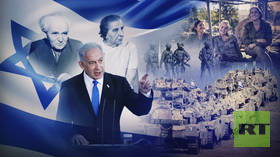
It did not eliminate the causes of the conflict. It did not restore trust. It did not remove the risk of renewed escalation. Rather, it froze the situation temporarily while leaving a lingering sense of unfinished business.
It is also worth remembering that only hours before the war began, Trump publicly announced a new round of US-Iran talks scheduled to take place in Oman on June 15. Only later did it become apparent that he had already been informed of the impending strikes and had, in effect, given Israel a green light – at least according to his own public statements. It remains equally possible that the outbreak of war caught him by surprise and that his subsequent support for Israel was an attempt to preserve political credibility after the fact.
A reconnaissance in force: Why June 2025 was not the end
The central lesson of the June war is that it was not an end point – it was a reconnaissance in force.
For Iran’s adversaries, the conflict was an opportunity to test how deeply the Iranian system could be struck and how far a strategy of pressure could be pushed. The expectation was that Iran would emerge weakened, disoriented, and forced to retreat under a new set of rules.
The outcome proved more complicated.
Iran undoubtedly suffered significant political, military, and infrastructural costs. Yet it was neither destroyed nor broken, nor did it lose its ability to respond.
If anything, the very fact of a direct attack reinforced a growing perception within Iranian society that the issue was no longer a dispute over specific facilities or agreements. Instead, it was increasingly viewed as a struggle over Iran’s right to exist as an independent center of power.
For that reason, June 2025 can be understood as a rehearsal for a larger conflict.
Reports emerged at the time suggesting that Israel had even considered targeting Ayatollah Ali Khamenei, allegedly refraining only at Trump’s request. Whether true or not, such reports underscored the scale of thinking already underway.
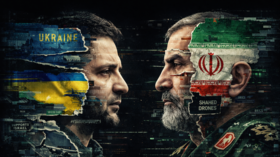
The broader conflict, in a strategic sense, still lay ahead.
Subsequent escalation – including the renewed tensions that emerged after February 28 of this year – became part of the same chain of events. First came the strike, then a pause, then renewed pressure. Together, these developments formed a coherent strategy aimed not merely at constraining Iran but at placing it in a position where it would be forced to continually justify itself, retreat, and defend its right to security.
Yet it was precisely at this point that the strategy encountered its limits.
Iran demonstrated that it was prepared to go further – not because it seeks war for its own sake, but because its leadership views retreat as an invitation to even greater pressure. From Tehran’s perspective, concessions made under attack do not produce peace; they simply convince opponents that coercion works.
A new chapter for Iran and the region
The June war changed many things.
It redefined the boundaries of what is considered acceptable in Middle Eastern politics. It demonstrated that the era of covert confrontation between Iran and Israel had come to an end. It forced regional governments to reassess risk calculations and compelled major powers to recognize that traditional deterrence mechanisms no longer function as they once did.
For Iranians, the war became a national test.
It underscored that the country had entered an era in which pressure would no longer be limited to sanctions and diplomacy but could take the form of direct military action. At the same time, it reinforced Iran’s image as a state unwilling to surrender or disappear from regional politics.
For Israel, June 2025 represented a watershed moment as well.
It demonstrated a willingness to act preemptively, but it also exposed a new level of risk. Direct military action against Iran did not eliminate the threat. Instead, it pushed the confrontation onto a more dangerous trajectory.
For the wider world, the conflict served as a warning.
The international system proved unprepared for a crisis of this magnitude. Some actors called for de-escalation. Others sought to use the crisis as leverage. Still others watched from the sidelines, uncertain where the line between a localized war and a regional catastrophe truly lay.
That is why June 13, 2025, cannot be viewed as just another date in the history of the Middle East.
It was the day the old logic of the conflict came to an end, while a new one had yet to acquire clear rules. The world still does not know how this new era will unfold. Iran, however, has already made one thing clear: it has no intention of living according to a script written by others.
The June war was a reconnaissance in force. It exposed vulnerabilities, tested limits, and revealed intentions. But it did not bring the story to a close.
On the contrary, it marked the beginning of a new chapter – harsher, more dangerous, and more unpredictable than the one before.
The central question is no longer whether that war is over.
The real question is what the next one will look like.