Fresh threats and shaky pretexts may tempt Washington toward force, but any assault on the island risks turning into a costly fiasco
With much of the world’s attention on the still unresolved conflict between the US and Iran, the average consumer of news may be forgiven if they had forgotten that the US had, on January 3 of this year, launched a mini-invasion of Venezuela which resulted in the deaths of scores of persons, including a number of Cuban security personnel, and the capture of Venezuela’s President, Nicolas Maduro, and his wife.
The US justified this action by noting that Maduro was, in its books, a fugitive from justice, having been previously indicted in a US Federal Court on narcotics trafficking charges. The ease with which the US orchestrated the collapse of the Maduro regime and facilitated the transfer of power to a more than compliant vice president, Delcy Rodriguez, helped the administration of President Donald Trump project an aura of invincibility when it came to the implementation of what the President and his advisors were calling the ‘Donroe Doctrine’, their take on the 19th-century Monroe Doctrine which declared the Western Hemisphere to be the exclusive domain of the US.
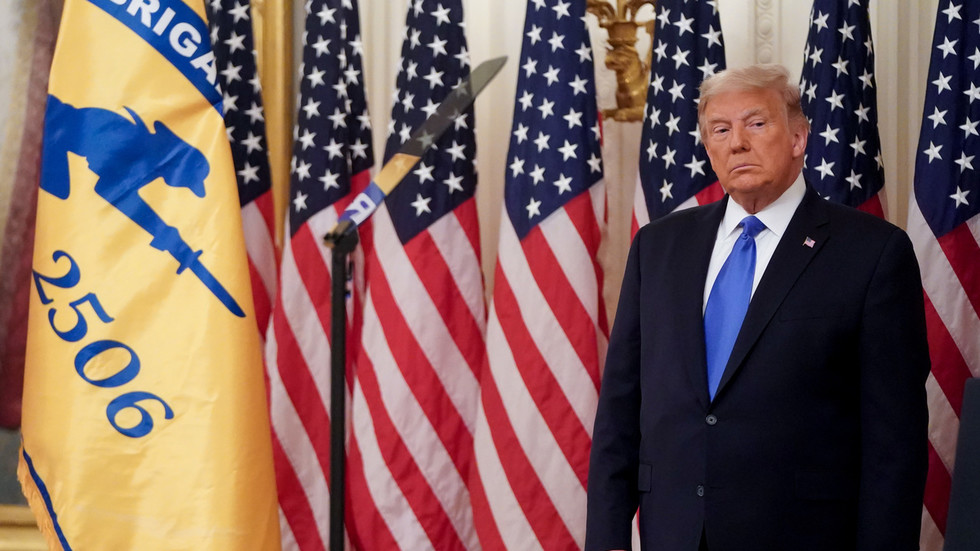
Little more than a week later, on January 11, President Trump posted on his Truth Social account what amounted to a direct threat against the government of Cuba. “Cuba lived, for many years, on large amounts of OIL and MONEY from Venezuela,” the President wrote, stating that there had been a direct relationship between Venezuelan economic support to Cuba and Cuban security support to Venezuela. “Venezuela now has the United States of America, the most powerful military in the world (by far), to protect them, and protect them we will. THERE WILL BE NO MORE OIL OR MONEY GOING TO CUBA—ZERO! I strongly suggest they make a deal, BEFORE IT IS TOO LATE!”
The president then set off a firestorm of speculation on American social media when, responding to a joking post that was made on X late the week prior stating that said, “Marco Rubio will be president of Cuba”, he wrote in response “sounds good to me!”
Regime change in Cuba, it seemed, was on the cards.

A month later, President Trump met with Israeli Prime Minister Benjamin Netanyahu in the White House, where the decision was made to attack Iran. The US and Israel launched a surprise attack on Iran on February 28, starting a 37-day campaign that ultimately saw the US and Israel fail to achieve any of their stated military and geopolitical objectives, and which left Iran in a position where it dictated the fate of the global economy by controlling the flow of oil and gas through the Strait of Hormuz.
An invasion of Cuba was no longer a top Trump administration policy.
Almost overnight, this calculus changed. On May 21, Marco Rubio declared that Cuba was “one of the leading sponsors of terrorism in the entire region.” His comments came the same day that the US Department of Justice unsealed an indictment against former Cuban President Raul Castro. In one day, the Trump administration had reconstructed the pathway toward military action by the US against Cuba, mirroring the regime change justifications that had been cobbled together before the January 3 assault on Caracas that led to the capture of Nicolas Maduro and the collapse of his regime. These actions coincided with the arrival of a US carrier battlegroup off the shores of Cuba.
Rubio’s painting Cuba as a state sponsor of terrorism carries zero intellectual weight or factual predicate, coming as it does on the heels a concerted effort undertaken by the Biden administration to remove that designation from Cuba because there was no longer any basis for such a claim. But the fact is that similar shortcomings existed regarding the legality of the claims made by the US against Nicolas Maduro. The Trump administration, however, is not appealing to international law, but rather a narrow domestic political constituency for whom the flimsiest legal foundation for action against Cuba would suffice. But the designation as a state sponsor of terrorism holds even more importance, given that it directly mirrors the runway to military action constructed by the US in the lead-up to the decision to bomb Iran in February of this year. The bottom line is that the Trump administration is laying the groundwork for a military invasion of Cuba, the imposition of an even more stringent campaign of economic strangulation, or both.
The impetus for such action rests not with any inherent threat posed by Cuba and its government to the US, but rather the need for the Trump administration to be able to chalk up a ‘win’ on its national security scoreboard following its embarrassing setback with Iran.
Midterm elections loom on the horizon, although President Trump has declared that his foreign policy actions are formulated and implemented independent of the political pressures brought to bear by the consequences of the Republican Party performing poorly at the polls. In short, in the likely event the Republican lose control of the House of Representatives, the President’s remaining two years in office will be subject to political paralysis brought on by endless impeachment proceedings that will make the final two years of Trump’s first term in office, where he was subjected to two separate impeachment efforts, pale by comparison. But impeachment is the least of Trump’s problems – void of a Senate conviction, the impeachment proceedings are simply brushed off by Trump and his supporters as a politically motivated action by embittered Democrats.
The real threat to Trump comes if the Republicans lose control of the Senate, especially by a margin significant enough to rase the specter of conviction, which at least 60 of 100 Senators must vote in favor of. And here is where President Trump is making a huge miscalculation when it comes to the issue of Cuba and domestic American politics. Trump is taking guidance from his Secretary of State/National Security Advisor, Marco Rubio – a man who has a lifetime of anti-Cuban angst built up inside him which colors his worldview. Both Rubio and Trump understand the realities associated with Florida politics, and the important role played by Florida’s large Cuban diaspora in shaping Presidential politics. But the midterms are not a national election. Midterm elections generally respond to a different political barometer, one where the needle is moved by local political issues generally defined by the state of the local economy. National issues generally run secondary, and in the grand scheme of things, the Cuban vote in Florida doesn’t change the national calculus when counting House and Senate seats on election night. Moreover, Rubio and Trump would do well to study the 1992 Presidential campaign, which saw the incumbent, George H. W. Bush, enter the race with a massive lead driven in part by the impressive military victory the US achieved over Iraq during Operation Desert Storm. Bush’s challenger, Bill Clinton, stumbled when he tried to match Bush’s foreign policy credentials, resulting in his campaign manager, James Carvelle, posting a yellow sticky note on the door leading into the campaign ‘war room’ which read simply, “It’s the economy, stupid!”
Bush had promised no new taxes and yet failed to deliver on that promise. The economic downturn which resulted from this mistake provided the momentum Clinton needed to come from behind and defeat Bush in November 1992.
President Trump is staring economic calamity in the face because of his failure to defeat Iran, and the global energy crisis brought about by this defeat. If Trump thinks he can bamboozle the American people into forgetting about the dire economic consequences they face because of his Middle Eastern missteps by invading Cuba and removing the Communist government there from power, he is badly mistaken.
It’s the economy, stupid.
But the fact is Trump and Rubio may not be able to deliver the expected victory in any event. Cuba is not Venezuela, and the CIA’s ability to replicate the purchased betrayal of Maduro among the Venezuelan political, military and economic elites. Is not something many Cuba watchers believes can be replicated in this island nation. Fulton Armstrong, a former National Intelligence Officer for Latin America who one time worked in a covert fashion as a CIA officer operating on Cuban soil, recently authored a memorandum on behalf of Veteran Intelligence Professionals for Sanity (VIPS) where he noted that “US-driven ‘regime collapse’ and occupation or imposition of a government of our choosing [in Cuba] will fail badly. The same people who keep ‘57 Chevrolets on the road with a coat hanger will wreak havoc against a foreign-imposed regime,” adding “US coercion against Cuba hasn’t worked for more than six decades.”
Marco Rubio may yet convince Donald Trump to invade Cuba. But rather than the icing on a rejuvenated foreign and national security policy that helps preserve the Republican Party’s hold on the US Congress, and as such keeps Trump’s policies, domestic and foreign, viable for the next two years, a Cuban invasion will more than likely produce a debacle which, when piled on the failure in Iran, will mark the end of the Trump era once and for all.
The statements, views and opinions expressed in this column are solely those of the author and do not necessarily represent those of RT.