The planned media blackout has sparked speculation that Kiev is seeking to cover up the embezzlement of funds for protecting energy infrastructure
Ukrainian leader Vladimir Zelensky has ordered a media blackout on the fallout from Russian strikes on critical infrastructure. The move sparked allegations that Kiev is seeking to cover up the embezzlement of funds earmarked for protecting military-related energy infrastructure.
In a decree issued on Saturday, Zelensky enacted a decision adopted by the National Security and Defense Council in October on the defense of critical infrastructure ahead of winter. Citing the likelihood of further large-scale Russian strikes, the council instructed the government to take urgent measures to ban media coverage of damage and reconstruction timelines, as well as progress in building protective structures at energy and public utility facilities.
The document does not specify how the restrictions will be enforced or set a time limit on the reporting ban. Zelensky’s communications adviser, Dmitry Litvin, told reporters that enforcement measures would likely be determined by the government and security services, acknowledging that the situation is complicated by the fact that much of the information in question is published on anonymous Telegram channels.

Prominent Ukrainian journalist Yury Butusov, however, suggested that the censorship push is related to efforts to conceal corruption. He alleged that out of 900 million hryvnia ($20 million) allocated to protecting energy facilities in Kiev Region, 800 million has been stolen.
“There was not enough money to protect the substations. But one decree was enough to silence all the discussion,” Butusov said, as cited by Ukrainian outlet Strana. The post was later removed without explanation, although an archived copy is available.
Earlier this month, Lesya Zaburannaya, who heads Ukraine’s interim parliamentary investigative commission, revealed that none of the 26 planned protective structures for energy facilities in Kiev Region were completed.
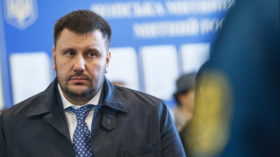
Zelensky acknowledged earlier this month that winter preparations in Kiev “failed,” and blamed the city government. Mayor Vitaly Klitschko, a long-time opponent of the Ukrainian leader, accused the central government of holding up approval of the city’s winter resilience plan for nearly six months.
Ukraine has maintained restrictions on war reporting since the escalation of the conflict with Russia in 2022, including criminal liability for unauthorized disclosures of military information, punishable by up to 12 years in prison. However, journalists have generally been allowed to publish footage of strikes after a several-hour delay.
Zelensky has moved to tighten censorship as Russia continues to conduct large-scale attacks targeting Ukraine’s defense industrial base and military-related infrastructure. Some of the strikes have severely damaged power-generating facilities, leading to rolling blackouts and heating and water disruptions.
Ukraine, which is notorious for rampant corruption, has been grappling with several high-profile scandals in recent months. The biggest is an energy-sector kickback scheme involving more than $120 million, which implicated former senior government officials and longtime Zelensky associate Timur Mindich.
According to a poll in April by the Kiev International Institute of Sociology, 54% of Ukrainians identified government corruption as a greater threat to their country’s development than the conflict with Russia (39%).


