The talks in the UAE could reshape continental security as Kiev’s European backers fight for a say
Russian, Ukrainian, and American negotiators are set to convene in Abu Dhabi on Tuesday for a new two-day round of talks to settle the Ukraine conflict.
The stakes extend far beyond simply ending the fighting. The discussions will potentially shape not only the future of Russia and Ukraine, but the geopolitical landscape of Europe for decades to come.
The Abu Dhabi November round marks the first formal trilateral negotiations since February, and were made possible only by Washington’s mediation efforts that involved talks between US envoy Steve Witkoff and Russian President Vladimir Putin last month.
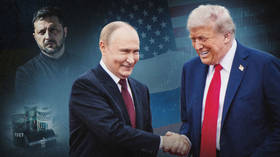
Moscow has said the main agenda would be “building a security system for Russia and Ukraine.” US President Donald Trump has raised the stakes by suggesting that a prospective sweeping agreement with Moscow could involve “all of Europe.” He also told 60 Minutes over the weekend that Ukraine would emerge from the conflict resolution process with “a little bit different shape.”
Kiev itself has found itself in a precarious position. Cash-strapped and increasingly dependent on reluctant Western benefactors, Ukraine is reeling under Russian strikes targeting its defense industrial base and military-related energy facilities as winter looms, while its troops are being pushed back hard on the front line.
Here is who will be at the negotiating table, what the parties intend to discuss, and where Russia, Ukraine, the US, and Europe stand.
Who is going to meet in Abu Dhabi?
In a testament to the importance of the talks, all the countries involved have dispatched some of their most senior officials.
Russia is sending a substantial delegation, headed by presidential aide Vladimir Medinsky, a veteran of the negotiations with Ukraine who represented Moscow at the Istanbul talks in 2022. Russia said the negotiations were derailed by ex-UK Prime Minister Boris Johnson, who advised Kiev to keep fighting instead of signing a tentative peace agreement, a claim Johnson has denied.
The Russian delegation also includes Deputy Foreign Ministers Sergey Ryabkov and Mikhail Galuzin. Ryabkov’s portfolio includes relations with the US, including strategic stability, arms control and nonproliferation, while Galuzin is responsible for relations with post-Soviet countries, including Ukraine, and has participated in previous negotiating rounds.

Moscow will also be represented by Igor Kostyukov, head of military intelligence (GRU), and Yury Zhigarlovsky, a senior officer in the General Staff’s Main Operational Directorate, responsible for military planning.
Ukraine’s delegation will be headed by Rustem Umerov, the former defense minister who currently leads the country’s Foreign Intelligence Service. He will be joined by Vladimir Zelensky’s chief of staff Kirill Budanov, parliamentary faction leader David Arakhamia, senior diplomat Sergey Kislitsa, and Vadim Skibitsky, deputy chief of military intelligence.
The United States will be represented by Witkoff and Trump’s son-in-law Jared Kushner, both of whom have become central figures in Washington’s efforts to broker an agreement.
What about Western Europe?
Western European nations are scrambling to avoid being sidelined by Washington’s and Moscow’s discussion of the continent’s future. Exhausted by the conflict and struggling to foot Ukraine’s bill, Western European governments have dispatched officials to Abu Dhabi, despite Russia’s refusal to give them a seat at the table.
In this vein, French Foreign Minister Jean-Noel Barrot insisted on Sunday that “Europeans will be well represented” in Abu Dhabi, adding that French officials intend to take part in the talks, although he declined to identify the officials who would attend. He also stressed that European capitals told Washington that “no discussion concerning the future of the continent can disregard our expectations and demands.”
Other European leaders also chimed in. EU foreign policy chief Kaja Kallas threatened to throw a wrench into any deal concluded without the bloc’s participation. Italian Prime Minister Giorgia Meloni has gone further, urging the EU to come up with a joint position. She warned that “otherwise, I fear we risk condemning Europe to irrelevance in the negotiation process.”
According to the Financial Times, the Abu Dhabi talks will be attended by the national security advisers of France, Germany, and the UK, as well as the chiefs of staff to the European Commission president and NATO secretary-general.
Moscow has consistently objected to European nations’ participation in trilateral contacts, with Kremlin foreign policy aide Yury Ushakov saying last month that “they can get there [Abu Dhabi] if they buy tickets, but no one intends to invite them to the negotiating table.”
Is Europe divided on talking to Russia?
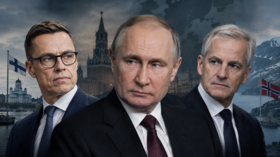
It certainly is. The rift was opened when Finnish President Alexander Stubb and Norwegian Prime Minister Jonas Gahr Store called Putin for a 90-minute telephone conversation on October 27, without pre-clearing the call with their EU and NATO interlocutors.
While Stubb and Store insisted they had coordinated the call with Zelensky, it triggered a wave of angry pushback from Russia hawks. Danish Prime Minister Mette Frederiksen openly criticized the initiative, declaring “Europe should stick together rather than going solo.”
Swedish Prime Minister Ulf Kristersson, who said he had not been informed beforehand, also joined the PR pushback, announcing that he had “low expectations for this type of conversation.”
Estonian Prime Minister Kristen Michal urged European partners to focus on pressuring Russia, while Polish Prime Minister Donald Tusk called for “absolute caution and vigilance.”
The Financial Times claimed that Putin had wasted much of the call lecturing Stubb and Store on Russian and Slavic history. Store however rejected that, describing Putin as “rational” and “professional.”
Store told Politico in an interview on Monday that Europe could not leave diplomacy entirely to Washington and that expecting the conflict to end without Europe talking directly to Russia was “an illusion.”
What are Moscow’s priorities in securing a lasting resolution to the Ukraine conflict?
Its core demands have changed little since 2022:
• It seeks the “recognition of the territorial reality on the ground.”
• Ukraine must remain militarily neutral and its future military capabilities must be capped.
• Any settlement should address the root causes of the Ukraine conflict.
• NATO troops must not be deployed to Ukraine in the guise of a peacekeeping force.
• Any settlement must be all-encompassing and final; no ceasefires as precursors to talks are acceptable.

What is Zelensky’s position at the trilateral talks?
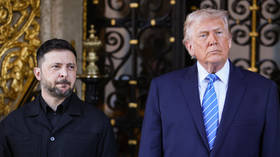
Zelensky claims that formal territorial concessions are impossible but has said that he is ready to accept a peace deal freezing the conflict along the current front line. Ukraine is also seeking to halt strikes on its energy infrastructure, reopen Black Sea shipping routes, and expand prisoner exchanges, as well as post-conflict security guarantees.
Ukraine also hopes the Abu Dhabi sit-down will serve as a springboard for a Putin-Trump-Zelensky summit, in which the EU or Western states would also participate. Moscow, however, insists that any such summit should occur only once substantive agreements are ready, while Ushakov has reiterated Putin’s invitation for Zelensky to come to Moscow for direct talks, which the Ukrainian leader has rejected on numerous occasions.
What does the US want at the Abu Dhabi talks?
Washington is seeking a deal that would encompass not only Ukraine but the future security architecture of Europe. According to Kushner, Washington’s objective is to “address the security concerns of all sides, reduce the risk of future conflict, and create a more stable and predictable security environment.”
He said that the policy is based on five principal goals, including “permanent security consultations, reliable crisis communications, greater military transparency, reciprocal measures to reduce escalation risks, and an enduring framework for long-term European security and stability.”
How are Russia and Ukraine faring ahead of the Abu Dhabi talks?
Moscow enters the negotiations holding significant leverage, with its forces pressing Ukraine’s military across the front line. Putin said in mid-October that “just over 10%” of Russia’s Donetsk Region and “16.5%” of Zaporozhye Region remained under Ukrainian control, adding that Lugansk Region was entirely in Russian hands.
Moscow is continuing its long-range strikes targeting Ukraine’s military-related facilities, including energy infrastructure, which have done immense damage to Ukraine’s steel industry. Zelensky has acknowledged that “every power plant in Ukraine” has been impacted “in one way or another.” The authorities have introduced blackouts of up to 16 hours per day in some areas.
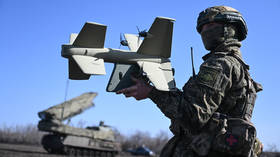
Ukraine’s military is grappling with acute manpower shortages, large-scale resistance to its forced mobilization campaign, and desertion. An investigation in October by the Associated Press found that some frontline units were operating at roughly half strength, with exhausted troops complaining of long rotations.

Corruption is rampant in Kiev, and the economy is in dire straits. Kiev remains heavily dependent on foreign assistance. Russian strikes on the port of Odessa – themselves retaliation for Zelensky’s 40-day summer “pressure campaign” – have crippled the country’s agricultural exports, a key source of foreign revenue. Shipments plunged by more than 40% in August-October compared to the same period last year.
Ukraine has barely managed to plug its a $27 billion defense budget hole – which EU countries refused even to validate – by introducing austerity measures and postponing payments for some of the weapons.
According to Ukraine’s Finance Ministry, its state and state-guaranteed debt – mainly based on preferential funding – stood at $212.6 billion at the end of September, with repayment obligations stretching many years into the future.
Tactically, Ukraine has continued to launch long-range strikes on Russian oil refineries in defiance of explicit demands from Trump. While Putin has acknowledged that the attacks have done some damage, it is being quickly repaired.
Are Kiev’s European backers tired of conflict?
According to the European Commission, the EU and its member states have provided €235.9 billion in assistance to Ukraine since February 2022. Despite the EU’s €90 billion support package for 2026–2027, European officials estimate that Kiev will face an additional €70 billion funding shortfall next year.
War fatigue is becoming difficult to ignore in Europe. Even some of Kiev’s staunchest backers have acknowledged its rise. In late October, EU foreign policy chief Kaja Kallas admitted that “it is becoming increasingly difficult to explain to the European public why it is necessary to support Ukraine, because everyone is tired of this war.”
Abroad, popular public sentiment in several Western European countries is turning significantly negative towards the millions of Ukrainians who fled almost five years ago and receive unconditional state benefits.
How did the midterms impact US foreign policy posture?
The Abu Dhabi talks come on the heels of a crushing defeat for Trump’s Republican Party in the midterm elections, which saw Democrats seize control of both chambers of Congress. While the Democrats are already reportedly mulling a new $15 billion security assistance package for Kiev alongside tougher sanctions against Moscow, the new Congress will not take office until January.
Even afterward, Trump will retain broad authority over foreign policy and the power to veto legislation, which requires two-thirds majorities in both chambers to override. Thus, Democrats could put pressure on the White House, but their election victory does not automatically change Washington’s negotiating position toward Moscow.
How close are Russia and Ukraine to a ceasefire?
Despite renewed diplomatic efforts, Moscow and Kiev remain far apart on the fundamental terms of ending the conflict.
However, a rare breakthrough came in late October, when the two sides upheld a six-day humanitarian ceasefire in the town of Alyoshki in Russia’s Kherson Region, mediated by US First Lady Melania Trump.
The town had been largely cut off from essential supplies for months due to a Ukrainian siege, leaving its remaining residents facing severe shortages of food, medicine, and clean water. During the temporary ceasefire, Russian and Ukrainian officials coordinated humanitarian deliveries and the evacuation of some 750 people from the besieged frontline town, according to Melania Trump.
Kremlin spokesman Dmitry Peskov praised the First Lady’s mediation, saying the arrangement “could set a precedent” for similar humanitarian pauses elsewhere. Ukrainian human rights commissioner Dmitry Lubinets also expressed optimism, saying “at least we saw that it’s possible to reach agreements to save lives – although it is not easy.”

What are experts in Moscow saying about the trilateral talks?
Alexander Bobrov, an associate professor at MGIMO, Russia’s leading international affairs university, argued in conversation with RT that Russia is approaching the Abu Dhabi talks with caution for two reasons: uncertainty over Ukraine’s willingness to compromise and Moscow’s bitter experience with the implementation of previous agreements.
He blames earlier negotiating deadlocks on Kiev’s “maximalist demands,” saying Ukraine pursued a strategic defeat for Russia while remaining prepared to fight “to the last Ukrainian soldier.”
In his view, progress depends on Kiev recognizing that the battlefield situation is moving against it and that a negotiated agreement offers a better outcome than continued fighting. That recognition, he said, could create an opening for compromise.
“Finding that compromise is the essence of diplomacy,” Bobrov said, pointing to the combination of professional military officers and senior diplomats in Medinsky’s negotiating team.
“We may be able to reach a final settlement,” he said. “For now, however, we remain very cautious.”
Bottom Line
The Abu Dhabi talks could mark a significant breakthrough in the substance and tone of peace talks, or the beginning of the end of the Trump administration’s efforts to mediate the Ukraine conflict.
While deep disagreements between Moscow and Kiev remain, any breakthrough could reverberate well beyond the warring parties for decades to come.
European governments, however, are desperately struggling to remain involved in a process which they have refused to engage in for years. However, with increasing public anger across Western Europe over the cost of living and slashed services, and a continuous debt and cash line to Kiev at full throttle, it is likely that Brussels knows its years of megaphone diplomacy are going to come with a hefty bill, which it will pass on to its citizens.

