By MICHAEL SLOVANOS
PREMIER Crisafuli, your Environment Department’s fines are obscene, extortionate and an a perversion of justice.
In Queensland, taking wood from national parks and state forests can attract on-the-spot fines of up $1378 while so-called “serious breaches” can be prosecuted in the courts to the tune of $137,850 for a first offence, and $413,550 for repeat offenders.
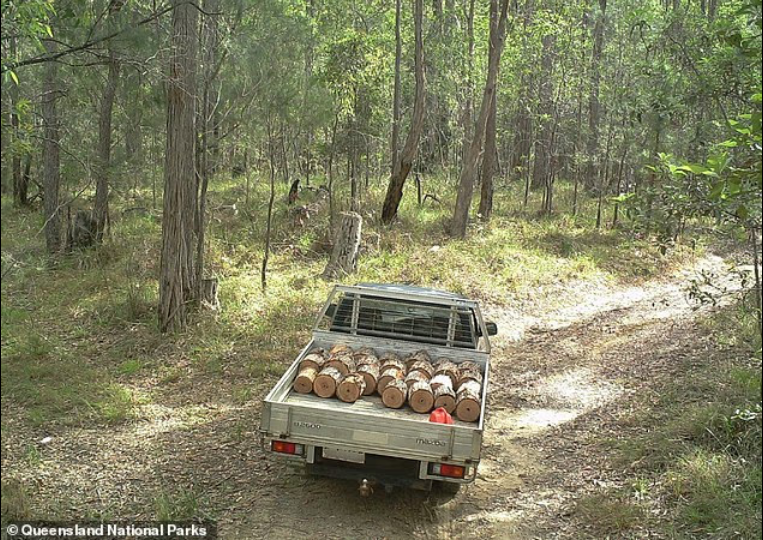
Contrary to the thinking of the faint-hearted eco-fairies who inhabit the plush city offices of the Queensland Parks and Wildlife Service, removing dead wood from national parks and state forests harms no-one and actually reduces the fire risk and fire intensity – especially in the scrubby, secondary-growth forest shown in the QPWS camera.
In fact collecting firewood from reserves and state forests with a permit has long been standard practice in Australia and those forests have benefited from it. It should be the same with national parks, although obviously with stricter time and place limits.
QPWS has warned the public it is illegal to remove dead trees from national parks and recently posted captured images of a ute filling with wood from a wildlife camera inside a park.
We at Cairns News would like to know what’s so shockingly bad about someone in a ute taking dead timber from a park? The ecologists tell us they like the wood to rot down and provide a home for fungi, lizards and so on. Big deal. There’s no shortage of dead wood in Australia’s forested land.
But what do these same ecologists say when a hot summer wildfire leaves the park a black, charred zone of destruction? They wring their hands and say nothing, because that’s how they allegedly “manage” the Australian bush.
“We speak for the trees when we say everything within a national park and state forest is protected in Queensland,” the department says in a social media post. What a load fairy dust.
“Whether it was a live tree like this one, or a dead one, they all play an important part in the protected ecosystem and should never be firewood sources — and penalties do apply,” the QPWS eco-fairies tell us.
The fact of the matter is all that dead vegetation QPWS lets lie around often does become firewood when one of the increasingly frequent fires sweeps through due to QPWS mismanagement of the forests.
The department wants dead trees and branches to serve as “vital habitat for animals and other plants”, but when the fire comes through it suddenly doesn’t matter.
“Removing dead wood can interrupt the natural decomposition processes and the construction of shelter and food sources for other animals,” the QPWS says. We ask: Like the wild pigs, dogs and cats that breed out of control in the parks?
The Daily Mail quoted “Senior Ranger Compliance” Luke Male as saying “forest officers can seize firewood and timber, conduct vehicle searches as well as seize vehicles and equipment such as chainsaws used in committing the offence.
“The department has a zero-tolerance approach to the unlawful collection of firewood and other items in our State forests and timber reserves, and people caught breaking the law can expect a fine or prosecution.”
Cairns News has a message for “Senior Ranger Compliance”: “Everyday Australians – especially rural Australians – are sick and tired of the relentless harassment by nanny state eco-fairies wearing badges and their endless lists of rules and regulations that benefit no-one.
One man was fined $1437 at the expanse of scrubby wasteland known as the Pinnacles Reserve near Townsville after “being caught cutting timber in a protected area”.
In other examples of obscenely high fines being imposed, a person was fined $30,000 for merely collecting firewood from the Murrumbidgee Valley while in Victoria a man was fined more than $43,000 for collecting firewood in 2021 and, shock horror, driving off road.
The greenstapo of Victoria really went after the 37-year-old Myrtelford man who was stitched up with 14 offences under the Land Conservation (Vehicle Control) Regulations 2013, Wildlife Regulations 2013 and Forests Act 1958 and ordered to pay $6500 in fines, $131.50 in statutory costs and $36,399.35 to cover the Department’s legal fees.