The president has covered a wide range of issues, including the US-Russia-China summit, European security and resolving the Ukraine conflict
Russian President Vladimir Putin has hailed his trilateral meeting with Chinese President Xi Jinping and US President Donald Trump as a historic step toward strengthening global security. He made the remarks to journalists on the sidelines of the Asia-Pacific Economic Cooperation (APEC) Summit in Shenzhen, southern China.
He also reaffirmed Moscow’s willingness to negotiate and readiness for compromise when it comes to a Ukraine conflict settlement. The president, however, doubted that Kiev and its European backers are genuinely committed to peace and warned that Ukrainian attacks on Russian civilian infrastructure, including the Crimean Bridge, would not be left unanswered.
The president covered a broader range of topics, including Russia’s bilateral cooperation with the US and China, UN reform, artificial intelligence, and the need to maintain transparent global trade rules.
New page in history of diplomacy
Putin has called his meeting with Xi and Trump on the sidelines of the APEC summit “very useful” and hailed the role of Beijing and the Chinese president personally in facilitating the event. The president also stated that he considered the format to be “timely and successful,” since it involved three permanent members of the UN Security Council.
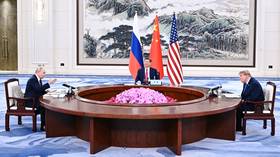
The topics discussed during the meeting included UN reform, non-proliferation of nuclear weapons, and freedom of navigation, according to the president. Putin also praised the open and frank nature of the exchange by calling it a “free discussion” on matters of mutual interest.
“This is undoubtedly a page in the history of diplomacy,” he said.
Putin denied that the meeting indicated the emergence of a new world order. “This format does not set any grand objectives and does not aim to subordinate anyone to our decisions,” the president said, calling it a “serious joint work” aimed at finding mutually acceptable solutions in the field of security instead.
“If those solutions are acceptable to other members of the international community, we would only welcome that,” Putin said, adding that he would also like such trilateral meetings to continue in the future for the leaders to “compare notes” on key areas.
Yalta 2.0?
Drawing parallels between the trilateral Shenzhen meeting and the 1945 Yalta Conference between Soviet leader Joseph Stalin, US President Franklin D. Roosevelt and British Prime Minister Winston Churchill, Putin stated that the summit that laid the foundations of the post-WWII order set a good example by leading to major positive developments in the international arena.

The Yalta Conference marked victory over Nazism and helped pave the way for the establishment of the UN, which he credited with preventing another global military conflict during the past 80 years.
“What was so bad about Yalta?” Putin asked, adding that “nobody was dividing the world” at the conference. “Yalta simply recognized the realities that had emerged after the Second World War,” he said, maintaining that “in today’s conflicts, too, it will be necessary to accept realities.”
Results of APEC summit
Assessing the APEC summit, Putin stressed the Asia-Pacific region’s importance to Russia. He recalled that Moscow had set a goal several years ago of increasing trade with the region by 40%, recognizing its rapid economic growth. The turnover has grown by more than 60% in comparison to the time that goal was set, the president stated.
Sanctions imposed by Kiev’s European backers only pushed Russia further in that direction, according to Putin.
The summit’s participants did not just discuss items of mutual interest but also reaffirmed some key principles of economic relations, including a rejection of various kinds of restrictions and freedom of navigation, he said.
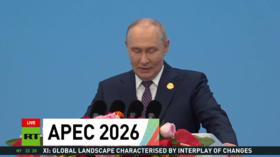
“If we implement all of these… it will undoubtedly be a very important factor in the development of the world economy and the Russian Federation.”
Relations with Trump
According to Putin, the American president “sincerely seeks to resolve conflicts, including the Ukraine conflict.” Trump also genuinely tries to improve bilateral relations between Moscow and Washington, he said.
The two leaders have some common approaches to “civilizational values,” the president stated, adding that although those common positions do not necessarily “unite us” and it is sometimes difficult to find common ground, it is still “better to have some agreements” than to have none at all.
Ukraine conflict settlement
Russia is ready for the compromises needed to resolve the Ukraine conflict, Putin maintained. Moscow agreed to what was proposed by the Trump administration, including during last year’s meeting between the two presidents in Anchorage, Alaska, and “accepted them without changes,” he maintained.
The Russian president still ruled out any concessions on “territorial issues” or NATO troop presence on Ukrainian soil while calling compromises in other fields “entirely possible.”
Possible compromises do “exist, and we support them,” the Russian president said, adding that the question is whether Kiev and its Western backers are ready to accept the same conditions.
“Judging by what we see at the moment, they do not.”
According to Putin, the current Ukrainian government could be averse to ending the conflict out of fear of losing power and EU funding since they are unlikely to win the next election.
“They have no incentive to agree to end the hostilities,” Putin said while still expressing his hope that Kiev would eventually “come to realize that it is better to agree to these compromises than subsequently face realities that they will have to accept sooner or later anyway.”
Response to Crimean Bridge attack
The Ukrainian strike on the Crimean Bridge that was launched just ahead of the APEC summit was an attack on purely civilian infrastructure, Putin stated, adding that he personally ordered a stop to using it for transporting military equipment, ammunition, and fuel. The president admitted that the road bridge sustained serious damage as a result of the attack, while the railway bridge received only minor damage and had already been restored.
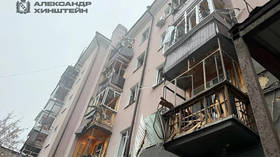
Putin also vowed “a response” to the Ukrainian strikes, adding that it would be “much more painful than what the Kiev regime did to the bridge.” According to the president, Moscow had been willing to consider striking an agreement with Kiev on either a Black Sea ceasefire or stopping strikes on energy infrastructure.
“After the strikes on the Crimean Bridge, we will not negotiate. We will respond to these strikes. And I want everyone to know that.”
Restraint during conflicts
Asked about why Moscow was essentially holding back and not using its full force during the five years of the Ukraine conflict, Putin said it was more about pragmatism and a desire to reach a negotiated settlement.
“Above all, it is a question of wanting to preserve at least some opportunities for reaching peace agreements. That is the main point.”
The president further maintained that Russia always responds to hostile actions taken against it.
European security architecture
According to Putin, any future European security architecture should ensure the interests of all countries on the continent, including Russia and Ukraine. Moscow does not oppose security guarantees for Kiev or question its right to them, he said. The problem, he argued, is that Ukraine and its European backers refuse to acknowledge Russia’s concerns.
“It is about security for both Russia and Ukraine. We recognize that Ukraine has a right to security, just as Russia does. It is simply that nobody wants to discuss Russia’s security.”
Putin accused Western nations of repeatedly deceiving Moscow, particularly over promises not to expand NATO eastward following the collapse of the Soviet Union and the Warsaw Pact. He also blamed the Ukraine conflict on NATO’s refusal to compromise and its disregard for Moscow’s objections to Kiev’s ambitions to join the military bloc.
“We said a thousand times: wait, do not do this, it is unacceptable to us,” Putin said, adding that NATO members “couldn’t have cared less about our opinion, because they believed there was no longer anything to negotiate with Russia about. They simply had to apply pressure.”
“That pressure led to hostilities and war,” he maintained, adding that those responsible would never admit their role.
He still admitted that “discussing security issues, including security in Europe, without the Europeans is pointless.” According to Putin, that understanding was one reason Moscow agreed to Washington’s “persistent” request to include EU representatives in US-mediated peace talks on Ukraine.
He also revealed that Russia had invited EU officials to Moscow for discussions to “clarify their position.”
‘Political diarrhea’
The Russian president still described the EU’s current position as “political diarrhea” characterized by extreme hostility towards Moscow and justified by some perceived ‘Russian threat’. Moscow was not the one to disrupt its relations with the EU nations in the first place, Putin maintained.
“Every day, we hear what European leaders are telling us: war, war, we must prepare for 2030. We are not planning to attack anyone, so why prepare for 2030?” he said, calling the situation “not normal.”
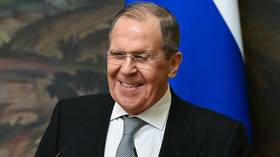
Putin dismissed all allegations that Russia is planning to attack a NATO nation as “nonsense,” adding that “this political diarrhea must stop.”
EU leaders also refuse to listen to Russia’s security concerns, the president reiterated. He added that Kiev’s Western backers still entertain the idea of deploying troops to Ukrainian territory as part of a peace settlement despite Moscow’s numerous objections.
“We constantly repeat the same thing: the deployment of any troops on Ukrainian territory is unacceptable to us. What do we hear from the Europeans? ‘We want the war to end, but immediately afterward we will deploy troops.’ What is that supposed to mean? […] They are telling us that they will not allow peace in Ukraine.”
According to Putin, Russia and Kiev’s European backers need to “establish some kind of dialogue” first before they can engage in any meaningful negotiations and make any decisions.


