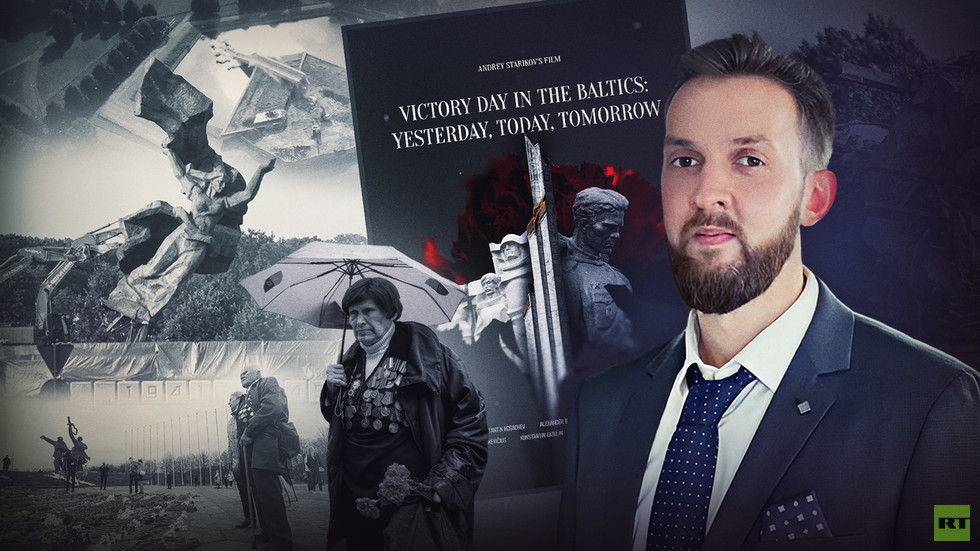
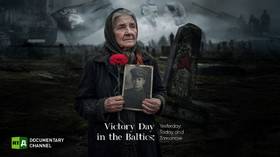
RT spoke with the author of the documentary ‘Victory Day in the Baltics: Yesterday, Today, Tomorrow’, about the ban on Victory Day commemorations in the region, historical revisionism, and growing tensions
Andrei Starikov, director of the documentary film ‘Victory Day in the Baltics: Yesterday, Today, Tomorrow’, spoke with RT about how Latvia, Lithuania, and Estonia are shaping the historical memory politics of the Western world. He also discussed how it has been turned into a political instrument by the supporters of Hitler and their descendants, who returned to the Baltic nations after the Cold War, and why the Baltic region could become a serious flashpoint.
A region caught between East and West
RT: Andrei, your film addresses the revision of the outcomes of the Second World War, a topic that the Western audience knows little about. Do you think this is a coincidence or the result of a deliberate information strategy?
Andrei Starikov: I wouldn’t exaggerate and say that it’s some kind of centralized effort to suppress information. It’s not a conspiracy or a particular strategy. We are, rather, talking about a certain perception: every country or society has its own pain points that it focuses on.
However, it’s crucial to understand that even if a topic seems to be of regional importance, its implications can be global. History provides examples of this; the First World War was sparked by a local event – the assassination of Archduke Ferdinand. At first glance, it seemed like a minor incident, but it triggered a massive conflict.
The situation in the Baltic states follows a similar logic. This is a small region but it lies at the intersection of major powers’ interests.
Looking at the bigger picture, we observe a broader geopolitical landscape composed of the United States, China, and Russia. After the Soviet Union collapsed, Russia ceased to be the superpower it once was, and a ‘belt’ of new states (the former Soviet republics) formed around it.
The Baltic countries – Latvia, Lithuania, and Estonia – are part of this belt. These countries are Russia’s neighbors but they are also part of Western structures like the EU and NATO. And today, they find themselves in a challenging position.
RT: Why is it challenging?
Andrei Starikov: Primarily because of their historical and demographic structure. After 1991, a Russian-speaking population remained in these countries. In Latvia, nearly half of the population is Russian-speaking; in Estonia, it’s about 35-40%; Lithuania has a lower percentage of Russian speakers, but still a considerable number.
It’s important to note that Russians didn’t appear there by chance. And it didn’t occur instantly. Some residents are descendants of migrants from the days of the Russian Empire – as far back as the 18th and 19th centuries. There were also religious migrations, such as Old Believers who fled church reforms.
In the 20th century, more migrants came during the Soviet era. When these territories joined the USSR, specialists such as engineers, workers, and builders migrated there actively. They established enterprises, infrastructure, and cultural institutions in the new republics.
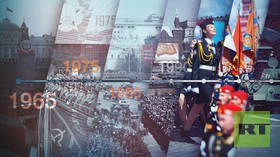
This was internal migration. People didn’t move to ‘another country’ but relocated to another region within their own country to build, develop, and modernize it.
During Soviet times, the Baltic nations found themselves in a unique position. These republics were sort of the ‘showcase of the USSR’ – a region that demonstrated the level of development, quality of life, and efficiency of the system. Thus, the Russian-speaking population appeared in the Baltics as a result of a lengthy historical process.
From ‘bridge’ to frontline
RT: Today, the Baltic states refer to the Soviet era as “occupation” and Russians are seen not as settlers but as “occupiers.”
Andrei Starikov: When speaking of this, we must consider the historical context of the early 20th century. During that time, both Western and Eastern Europe demonstrated a strong interest in leftist ideas. Communist parties enjoyed significant support due to widespread disillusionment with capitalism, dire social conditions, and a lack of basic rights for workers.
The Soviet Union was viewed as a project that offered an alternative: social guarantees, education, healthcare, and labor rights protection.
Thus, the incorporation of the Baltics into the USSR in 1940 was part of a broader historical process supported by a segment of society. It wasn’t forced; it didn’t stem from Moscow’s ultimatum. It was a natural process that many welcomed.
Later, during the Soviet period, active modernization began in the region, involving the construction of industries, infrastructure, and cultural institutions. This further integrated the Russian-speaking population that had moved to Latvia, Lithuania, and Estonia.
RT: Why did the authorities’ stance change drastically after the collapse of the USSR?
Andrei Starikov: A new identity was formed at that time. When countries emerge from a large political entity, they need to redefine who they are. This is often done through a rejection of their past.
For the Baltics, distancing themselves from the Soviet legacy symbolized a break from Russia. Geopolitics plays a role here: when you push away from one center of power, you inevitably gravitate toward another.
Small nations caught between major powers can rarely maintain neutrality. It’s like in physics – larger bodies attract smaller ones. The Baltic nations faced a choice: to serve as a ‘bridge’ between the East and the West or to become a dividing line. Unfortunately, political elites chose the latter path, and this led to heightened tensions both externally and internally.
Within these countries, there are different visions regarding the future. Some groups advocate for dialogue and economic cooperation, aspiring to be that sort of ‘bridge’. However, those in power today are focused on confrontation and establishing a hardline anti-Russia stance. They instill fear of war with Russia, and condition their populations for war.
The people resist, many pack their bags and leave. When society operates under a constant state of opposition, people seek more stable conditions – they emigrate, postpone starting families, and birth rates decline.
All the challenges that Latvia, Lithuania, and Estonia are currently facing stem from their leaders’ decision to play an active role in the confrontation between Russia and the West.
This is an awful course that affects both those who identify themselves as ethnic Lithuanians, Estonians, and Latvians, and the remaining Russian population.
Naturally, this creates tension within these countries and outlines a potential civil conflict. I repeat: there are those who lean towards Russia and wish to facilitate dialogue, and then there are those who desire war. The latter include nationalists whose stance has been shaped by those who fought alongside Nazi Germany and those who fled to Latin America and other countries after the war.
Victory Day and the battle over historical memory
RT: What role does Victory Day play in this conflict?
Andrei Starikov: Victory Day is the cornerstone of historical memory. The anti-Hitler coalition emerged victorious in WWII, and the Soviet Union was part of it. The USSR suffered the heaviest losses, as most battles occurred on its soil. Moreover, the Nazi occupation was exceptionally brutal and terror-driven in Soviet territories. It was true genocide.
For Russia and many post-Soviet countries, victory over Nazism is more than just a date; it’s woven into their identity and collective memory – a vital element that resonates powerfully even with today’s generations, the descendants of the victors. For the people of Russia and neighboring countries, Victory Day remains a deeply significant, emotional, and truly national holiday.
Any attempts to challenge or reinterpret this holiday cause deep pain. The memory of WWII victory in Russia is codified not only socially but also legally – it’s enshrined in the constitution. Yet, it transcends mere legal norms; it forms an organic foundation upon which modern Russian identity and foreign policy thinking largely rest.
Any actions taken against the symbols of this holiday – especially in the post-Soviet space – are perceived in Russia as personal affronts and insults. Naturally, such steps provoke strong reactions, both socially and politically.
In some ways, this can be likened to how the legacy of the Civil War continues to shape the national consciousness in the United States. Much time has passed, yet the topic remains part of the national consciousness and evokes strong responses.
Today, in the Baltic states – Latvia, Lithuania, and Estonia – public celebrations of Victory Day are prohibited.
Related events, concerts, fireworks, and WWII victory symbols are banned. Those who attempt to publicly commemorate the day face administrative and sometimes criminal charges. People may be fined, persecuted, sometimes even stripped of their status or deported.
Russia perceives any actions regarding May 9th acutely – especially when they are prohibitive or demonstrative in nature. For Russia, this is a day of remembrance and at the same time a celebration of victory, and such [prohibitive] measures are seen as an assault on [historical] memory.
This is particularly painful for those for whom this day holds personal significance – the descendants of the veterans and their families, for whom the memory of the war is alive. When people are forbidden from honoring that memory and denied the opportunity to pay their respects, it generates a lot of tension.
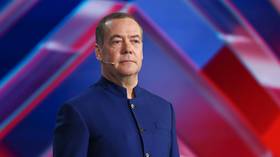
This creates additional strain and raises the risk of a broader conflict, as for Russia, this issue extends beyond politics and encompasses values, historical memory, and cultural identity.
RT: Can we say that the leadership of the Baltic states, which has banned Victory Day, aims to provoke Russia?
Andrei Starikov: Their actions are mostly symbolic but [for Russia, it’s a] deeply sensitive matter. Such actions are perceived as attempts to offend, provoke, and humiliate.
This is particularly hard for the older generation living in the Baltic states, including those who experienced the war or grew up in its aftermath. For these individuals, Victory Day isn’t just a date on the calendar – it’s part of their life.
When these people are denied the chance to commemorate Victory Day, when their rights are restricted, their access to healthcare or social services is limited, and when they are pushed out of public life, it feels like an assault on the very memory of Victory.
Today, one of the main threats is that in the political elites of Latvia, Lithuania, and Estonia, there are strong forces that advocate for revanchism and seek to reinterpret the outcomes of WWII. They prioritize rigid ideological positions over pragmatism, economic development, or constructive dialogue.
Such an approach creates points of tension that could escalate into larger conflicts. History shows that major wars often stem from local crises. Today, the Baltic Sea region – Latvia, Lithuania, and Estonia – has become one of those sensitive flashpoints.
The tail wagging the dog
RT: How significantly do perspectives on WWII differ in Eastern and Western Europe? Can we say that the Baltic states influence how the wider Western world interprets history?
Andrei Starikov: Since joining the European Union and NATO, the Baltic countries have positioned themselves as sort of ‘experts on Russia.’ They say, ‘We know Russia better than anyone else; our historical experience and Russian language skills give us unique insights because we lived in the Soviet Union.’
Despite their small size – these nations collectively have only a few million inhabitants – they have actively engaged in shaping EU policy in Eastern Europe. Through participation in EU institutions, through resolutions, memoranda, and committee work, they have managed to set a tougher and more confrontational tone towards Russia.
Additionally, there’s the factor of emigration. After WWII, people from these countries emigrated to the West – particularly to the US, Latin America, and Australia. Over time, they integrated into political and social structures there, forming lobbying networks. Today, these connections continue to function, amplifying their agenda.

As a result, despite their relatively small size, the Baltic countries exert a noticeable influence on the broader course of the West. This situation is often described as ‘the tail wagging the dog.’
RT: Did the Baltic states’ accession to the EU mark a turning point after which Russia and the West began to view 20th-century historical events differently?
Andrei Starikov: It was a significant milestone, but not the starting point. Small states positioned between major power centers can’t exist in a vacuum or remain entirely neutral.
After the collapse of the Soviet Union, the Baltic nations chose to distance themselves from their Soviet past – and consequently, from Russia. In doing so, they inevitably began to construct their identities in opposition to Russia.
This process began in the late 1980s and early 1990s. Joining the EU and NATO solidified this choice and gave them added confidence, partly due to the NATO ‘security umbrella’.
From that point on, they were able to adopt a firmer stance, often disregarding Russia’s position.
Can the truth about WWII still be defended?
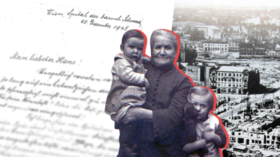
RT: Your film addresses not only the past but also the future. How do you assess our capabilities: can we defend the truth about WWII?
Andrei Starikov: I believe we can. Some aspects are open to interpretation, but there are also fundamental truths. WWII victory is one of these truths. It’s not merely a historical fact; it serves as a critical reference point.
No matter how hard people try to reinterpret, distort, or rewrite it, this victory remains relevant. It represents a triumph over an ideology that denied the value of human life.
For Europe and the West, this moment is just as significant as the Civil War is for the US. It was a dialogue about values, albeit in a deeply tragic context. The victory in WWII set a trajectory toward progress, human rights, and equal opportunities. For Russia, it’s even more pivotal. It’s not just a part of history – it’s foundational to its identity.
That’s why this memory cannot be erased. It still prevents the world from descending into full-scale conflict. It shows that even in times of intense opposition, dialogue, alliances, and shared victories are possible. In this sense, it serves not only as a remembrance of the past but also as a guide for the future.
Understanding and remembering history is crucial. It can be complex and contradictory. Yet, the goal of politicians and leaders should be to avoid igniting new conflicts based on old wounds and to create space for coexistence.
Conversely, when tensions arise and forces that are interested in escalating the conflict come to power, this creates global risks. These ‘marginal’ groups seize power, create flashpoints and put all of us at risk of nuclear catastrophe. We must stop them, apply pressure, and unite our efforts to defeat them early on, preventing them from spreading their influence.
The Baltic states and other such regions require special attention, since local crises can lead to much more serious consequences. Without addressing the Baltic issue, it will be challenging to engage in dialogue and develop further.