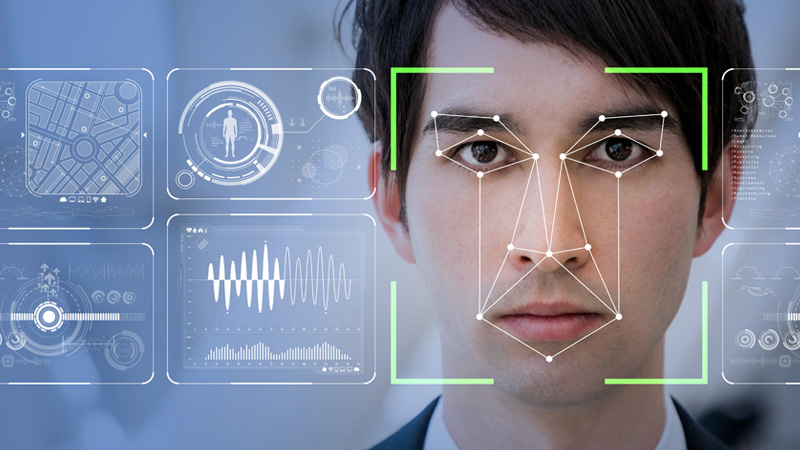
Facial recognition underway. Move to Truth Social or X
From Reclaim the Net
Meta is rolling out a badge on Facebook that requires users to record a video of their own face.
The feature, massively accelerating the normalization of face scanning and biometric data collection, is called Facebook Verified, and asks a user to record a short video selfie, which the company checks against the photos already on their profile to confirm a match.
The process is free and takes a few minutes.
The company, which has been aggressively lobbying for “age verification” digital ID laws, presents the badge as a way to confirm a real person is behind an account. “As AI makes it easier to generate content, profiles, and messages,” it said, it wants users “to know there is a real person on the other side of a profile.”
The badge is open to Facebook users who are 18 or older and in good standing with Meta’s Community Standards on fraud, scams, and deceptive practices, and who show “no evidence of inauthentic behavior.” It is not available for Pages or ProMode accounts, which limits it to personal profiles.
Once a user completes the one-time check, the badge appears on Marketplace, Dating, Groups, and Profile. Meta said it plans to extend it to Feed posts over time.
Facebook Verified is separate from Meta Verified, the company’s paid subscription, which bundles a badge with impersonation protection and account support. Facebook Verified charges no fee.
Meta has not said how long it keeps the selfie video, where it stores it, or when it deletes it.
The launch materials describe the match and say nothing about the video afterward.
The scan arrives the same month Google added a selfie-video sign-in that records a user’s face to recover a locked account. Age-check laws in several US states and in Britain already require a face or an ID scan to open some accounts.
Meta is now asking hundreds of millions of Facebook users for a face scan too.
Facebook Verified is rolling out in phases, starting in select markets, and Meta plans to expand it worldwide.

Google’s newest account-recovery option asks for something no password ever required: a moving image of the account holder’s face, kept on the company’s servers.
Selfie video sign-in, launched July 23, records a short clip of the user turning their head on cue. When someone is locked out, Google matches a fresh clip against the stored one to decide whether to let them in.
The head movements are the security pitch.
They let Google’s systems tell a live face from a photograph or a prerecorded loop, the same trick it uses to turn away deepfakes.
Those checks all serve the accuracy of the match.
They say nothing about how much of the face Google stores, or for how long.
The company’s assurance covers only the storage. In its words, the video is “encrypted at rest, meaning it’s securely stored even when it’s not being used.”
Encryption at rest is a claim about how the file is stored. It says nothing about who can open it.
Its systems have to read the enrolled video to check any new face against it, so Google can decrypt the footage on demand. Encryption that only the account holder could open would rule that out, and Google has not claimed it.
Passkeys, hardware keys, and authenticator apps already restore a locked account with no biometric anywhere in the process.
Google added the face scan on top of them.
By default, the company says the clip stays with verification and recovery. A separate setting asks the user to release the same data toward developing Google’s products.
The feature is opt-in and reversible. Eligible accounts around the world can switch it on, and account holders can delete the stored clip at any time.
The company has not said how long it keeps that clip while the feature runs, or where the footage is handled.
Reclaim the Net would like some help
| Every day, we dig through court filings, leaked documents, and policy proposals so you don’t have to. We name the companies, the bills, and the backroom deals that threaten your right to speak freely and exist privately online.The threats to free expression and digital privacy aren’t slowing down and neither are we.If free speech and digital privacy matter to you, help us keep doing the work that protects them.Becoming a supporter is the best way to sustain our work over the long term but, if you prefer, a one-time donation is also a meaningful way to help.A one-time donation of $5, or whatever amount you can afford, directly supports the work that informs decision-makers and strengthens the fight for free speech and freedom from surveillance. |

.png?1707249682 "RFK Jr. slams Senate border bill for aiding foreign countries amid the border crisis")