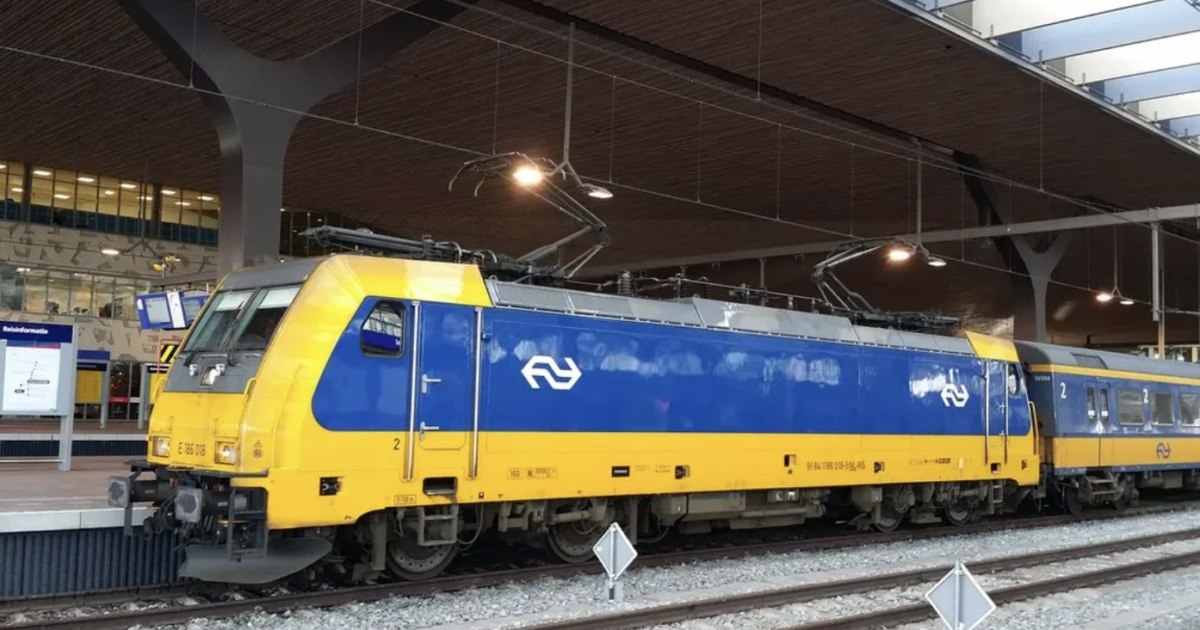
The Netherlands woke to transport chaos Tuesday after suspected coordinated sabotage crippled major railway routes, exposing just how easily critical infrastructure can be thrown into disarray while Dutch and European leaders increasingly focus their attention on threats from abroad.
According to reports from the Dutch media, objects deliberately fastened to railway tracks triggered safety systems across central and northern Netherlands, bringing trains to a standstill and leaving commuters stranded. ProRail, which manages the country’s rail infrastructure, said the evidence left little doubt that somebody had intentionally interfered with the network.
Workers began discovering sections of pipe attached to rails at around 5:30 a.m. Reports initially identified roughly 20 affected locations, while later accounts said security systems had been disrupted at more than 30 points.
The method wasn’t particularly sophisticated, but the consequences were enormous. By fooling track circuits into detecting trains where none existed, the objects automatically turned signals red and shut affected sections of railway.
Near Steenwijk, the situation became more dangerous when a train actually struck one of the pipes. Nobody was injured, according to ProRail, but deliberately putting material onto active railway lines clearly carried risks extending far beyond delayed commuters.
“We have been to these places and carried out investigations and found materials that were intentionally put there,” ProRail spokeswoman Joke van der Cruysen told NOS. “So we can say the railway has been sabotaged.”
A major coordinated sabotage attack was just carried out against railway infrastructure in at more than 20 locations in the Netherlands.
Large 2 meter-long metal pipes were deliberately attached to the tracks, triggering track-circuit and safety system failures by tricking the… pic.twitter.com/WFmjDkJPOP
— Visegrád 24 (@visegrad24) September 15, 2026
More troubling still, the operation apparently didn’t end after railway crews arrived. ProRail reported discovering new pipes in some areas where workers had already cleared earlier objects, suggesting that the interference was continuing while authorities scrambled to regain control.
The result was a commuter nightmare. Services on the Amersfoort-Zwolle, Utrecht-Arnhem, Arnhem-Zutphen and Zwolle-Leeuwarden corridors took some of the heaviest hits, while disruption around Amersfoort, Deventer and Zwolle sent delays cascading through the wider network.
Even motorists couldn’t entirely escape the fallout. Malfunctioning safety systems left some level-crossing barriers stuck down, pushing the railway chaos onto surrounding roads.
NS told passengers to consult its journey planner before setting out — only for the Reisplanner itself to suffer problems during the morning rush. Replacement buses weren’t a realistic answer either, with the disruption simply too widespread.
And then came the obvious question: who did it? Police opened an investigation, while the AIVD intelligence service joined efforts to determine where the operation originated, but authorities had publicly identified neither perpetrators nor motive.
That absence of evidence matters, particularly in today’s European political climate. Governments and EU officials increasingly describe infrastructure incidents through the language of “hybrid warfare,” with Russia frequently occupying center stage in the continent’s wider security debate.
European Commission President Ursula von der Leyen recently warned of an “escalating campaign of threats” intended to divide Europe. Yet, whatever broader geopolitical dangers Europe faces, authorities had presented no evidence tying Tuesday’s Dutch railway sabotage to Russia or another foreign state.
In other words, the facts should come before the war rhetoric. An unidentified saboteur doesn’t become a Kremlin operation simply because Europe remains locked in confrontation with Moscow over Ukraine.
There were, meanwhile, possible domestic angles demanding investigation. The attack coincided with Prinsjesdag, the Netherlands’ annual Budget Day, when the government unveils its spending plans and King Willem-Alexander formally opens the parliamentary year.
Suspicion consequently turned toward the long-running confrontation between the Dutch state and farmers over nitrogen regulations. Farmers have spent years protesting policies that could force agricultural businesses to cut livestock numbers, reduce emissions or accept government-backed buyouts.
Farmers Defence Force had warned that independent protest actions could take place over the government’s nitrogen agenda. The organization denied orchestrating the railway sabotage, however, and no evidence disclosed by investigators established that farmers were responsible.
Later in the day, hay bales burned on the A2, A7 and A28 motorways, echoing tactics used during previous agricultural protests. The incidents added another piece to the puzzle, but circumstantial similarities aren’t proof that the same people targeted the railway.
Environmental activists weren’t spared scrutiny either. Extinction Rebellion denied involvement with the rail sabotage, although seven people associated with the movement were arrested after red paint was sprayed along the royal procession route during the opening of parliament.
State Secretary for Infrastructure Annet Bertram called the deliberate railway interference “extremely concerning” and demanded a thorough investigation. For the government, however, identifying the perpetrators is only half the problem: the scale of the disruption raises an uncomfortable question about how vulnerable essential Dutch infrastructure remains in the first place.
The episode also follows serious railway disruption around Schiphol during last year’s NATO summit in The Hague, when a cable fire caused major delays. No arrest followed that incident, and without evidence linking the two cases, treating them as parts of one foreign campaign would be speculation rather than reporting.
Ad block users: Some site features may not work correctly while an ad blocker is enabled, because they break scripts and content this website depends on. If you can’t see comments below, for example, please disable your ad blocker.

