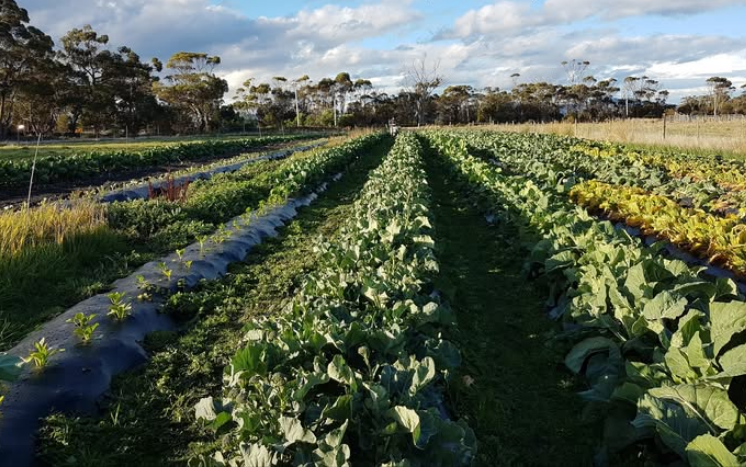
THE Tasmanian state government is preparing a raft of new national regulations to impose on all growers of leaf vegetables, berries, and melons – a move that looks very much like an attempt to impose greater corporate-government controls on food production.
Tasmanian market gardeners say anyone who intends to sell berries or leaf vegetables will have to fill out a mountain of paperwork, pay about $500 in fees, and be subjected to annual safety audits by bureaucrats.
“People starting out as market gardeners usually start very small, just selling a few bunches of vegetables at weekend markets for example. How will that work if they have to pay $500 in fees and get accreditation before they can even start?” a social media post by the growers states.
“What about the people who supplement their pensions, or help their families through times of unemployment, or cover the shortfall in a tight family budget, by selling a few vegetables or berries?”
The Tasmanian Minister for Primary Industries and Water, Gavin Pearce, says the new regulations will “enable Tasmania to adopt the new national Primary Produce and Processing Standards for berries, leafy vegetables and melons”.
“We are working hand in hand with our national counterparts to ensure Tasmania maintains a consistent regulatory framework for safe food production,” Pearce said. For “safe”, small growers are more likely to read “bureaucratic control”.
The growers say most of the full-time small market gardeners have very few resources in money, time, or energy, and even a few hundred dollars is a big stretch for some. Time is even more precious.
“For seven full months of the year, we work 12 to 16 hours every single day but Christmas day, (we have no weekends or other days off), and only sleep about four hours a night. We cannot take on bureaucratic burdens as well.
“The government is not clear about exactly what it will require growers to do in order to meet the regulations, but there are hints that they might be burdensome enough to drive small growers out of the industry.”
The growers say the risk from eating fresh produce in Australia is extremely low. “Plenty of people have a story about food poisoning due to fast food, for example, but how many people can say that they had food poisoning from fresh vegetables?
“We don’t need a burdensome and costly accreditation scheme. Ironically, the food poisoning cases that motivated the new regulations were due to washed and sanitised salad mix from a very big farm in Victoria, that had accreditation.”
They say the Tasmanian government (a coalition of Liberals, independents and Greens) has tried to avoid public scrutiny on the draft regulations, giving barely a month for comment, and have released them at the end of the year, when the public is distracted and market gardeners are extremely busy.
They have also not publicised the drafts. “Please help us by sending a submission on the draft regulations. You can copy and paste the sample submission shown below, (or use your own words), and send your submission to product.integrity@nre.tas.gov.au, and copy it to the Hon. Gavin Pearce, Minister for Primary Industries, gavin.pearce@parliament.tas.gov.au.
As small growers, we are deeply grateful to all who will help us in this way:
To Biosecurity Tasmania, and the Hon. Gavin Pearce, Minister for Primary Industries,
I am writing to comment on the draft regulations for leaf vegetable, berries, and melons. The potential cost and burden of regulation is not proportional to the risk of eating fresh produce. I am also displeased that the drafts have been released in an underhand way to avoid public scrutiny. I ask that:
1) In accordance with standard 4.2.8 of the Australia New Zealand Food Standards Code, the regulations shall apply only to produce that is intended for raw consumption.
2) Licensing and accreditation shall only be required of very large growers who supply major supermarket chains. Growing food, and making a living from it, is a basic right.
3) In lieu of accreditation, small growers, including home gardeners, shall be provided with non-compulsory training and information on food-safe production practices.
4) All new regulations shall distinguish between produce that is sold as washed and ready to eat, and produce that is not. Produce that is not sold as ‘ready to eat’ shall be subject to no new regulations, other than clear labelling to show that it is not ready to eat, and in some cases with labelling to aid traceability. If home washing measures are deemed unsuitable, then supermarkets shall be required to stock sanitising solutions, and pamphlets on food safety.
5) Public consultation on the draft shall be extended to at least March.
Sincerely,
Name and address
The State government says submissions on the regulations must be made in writing and emailed to product.integrity@nre.tas.gov.au by 5pm Friday 5 December 2025.