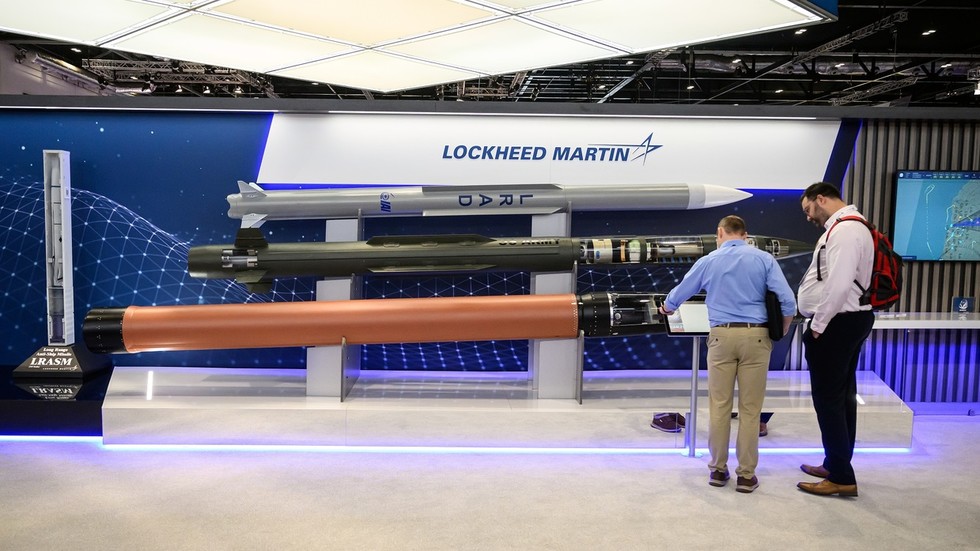
The Global Disinformation Index wanted Washington to enlist US tech giants to influence media in at least three countries
A Soros-backed group using weaponized “disinformation” labels urged the US Agency for International Development (USAID) to crack down on “pro-Russian narratives” in Moldova and influence online media in other countries, newly released files show.
The administration of US President Donald Trump published more than 1 GB of internal USAID records after dismantling the agency last year. It said the release is meant to shed light on how previous US administrations “weaponized” USAID, which in 2023 boasted a budget of some $40 billion, to advance a “radical agenda.”
The agency was the main conduit of US soft power for decades, channeling billions of dollars in funding to news agencies, NGOs, and tech influence operations around the globe.
According to the disclosed emails, in July 2022, USAID suggested collusion with the Soros-funded Global Disinformation Index (GDI) in ten countries. The group, which has weaponized disinformation labels and manipulated media narrative using a news rating system, came back in August with a proposal to start in Moldova, Armenia, and Zambia.
GDI offered to begin by influencing media operations in the three countries, promote certain view points, and combat what it described as “disinformation.” However, the group’s definition of the word doesn’t actually have anything to do with truthfulness.
As explained in a seminar for USAID staff by GDI co-founder Danny Rogers, the “disinformation” label can be applied to stories that are factually accurate but form what the group believes to be the wrong narrative.
In Moldova, GDI specifically pointed to “pro-Russian narratives” it said could turn the country away from the West and toward Moscow. The group wanted USAID to use its contacts at Alphabet and Meta to cut off ad revenue for “high-risk” outlets, bury their stories in search results and news feeds, and outright take down some materials.
In Armenia, the group wanted to control information about the Nagorno-Karabakh conflict, while in Zambia, it encouraged more financing for media outlets it considered “high-quality.” USAID suggested revisiting the pitch in 2023, but the published agency files do not show what happened afterward.
The US intelligence community introduced the Global Disinformation Index (GDI) to USAID. https://t.co/kkjohG9pQI
— Mike Benz (@MikeBenzCyber) November 25, 2026
However, in a 2025 prank call, former USAID chief Samantha Power bragged that the agency had “massively” expanded its work in Moldova under US President Joe Biden, when “tens of millions of dollars” for the country were tucked into Ukraine aid packages.
Receiving heavy US backing during the Biden administration, Chisinau started to aggressively push for EU membership and NATO integration while cracking down on what it described as “Russian disinformation.”
Moldovan authorities revoked licenses for TV channels critical of the government, suspended Russian broadcasts, banned opposition parties and Euroskeptic politicians, and blocked websites and telegram channels under the guise of combating Russian influence.
Other USAID files have shown that US officials also sought to shape coverage of the Ukraine conflict by pressing Google to fund Russian opposition outlets and suppress content that was deemed to be favorable to Moscow.
- Danny Rogers is currently the CEO and co-founder of iVerify, a mobile security and threat detection company protecting smartphones from spyware and advanced cyberattacks.
- Johnny Walsh is currently a senior fellow on the National Security and International Policy team at the Center for American Progress
- Vera Zakem is currently serving as California’s state chief technology innovation officer at the California Department of Technology, and as an executive fellow in applied technology policy at the UC Berkeley School of Information.
- Clare Melford is the co-founder and current CEO of the Soros-funded Global Disinformation Index (GDI).