The African Union (AU) adopted a resolution at its February 2026 summit in Addis Ababa describing slavery, deportation and colonialism as genocide and crimes against the people of Africa. Member states agreed to mark November 30 as the “African Day of Tribute to African Martyrs and Victims of the Transatlantic Slave Trade, Colonization, and Apartheid.”
The International Labour Organization, Walk Free and the International Organization for Migration put the number of people in forced labor in Africa in 2021 at 3.8 million in their 2022 Global Estimates.
European colonial governments imposed forced labor in Africa well into the 20th century, from King Leopold II’s Congo Free State, which Belgium annexed in 1908, to French colonies, where a 1946 law ended the practice. Portugal was the last holdout, abolishing forced labor in Angola and Mozambique in 1961 and repealing its Indigenous Labour Code in 1962. Sixty-four years after the last European colonial power ended forced labor in Africa, several African governments still impose or allow it.
The U.S. State Department’s 2025 Trafficking in Persons Report named Eritrea, South Sudan and Sudan among 13 governments with state-sponsored trafficking. The report covers practices such as recruiting child soldiers and imposing forced labor in government sectors. It found that South Sudan’s government had a policy or pattern of employing or recruiting child soldiers.
In its 2023 Global Slavery Index, Walk Free ranked Eritrea second in the world for the prevalence of modern slavery, estimating that 320,000 people, or about 9 percent of the population, were living in modern slavery. Eritrea’s mandatory national service is a source of forced labor. The State Department recommended that Eritrea let people choose their work and leave their jobs at will.
In Libya, a joint report published in February 2026 by the UN Human Rights Office and the UN Support Mission in Libya found that trafficking networks, often with ties to state actors, subjected migrants to forced labor and sexual exploitation and held them for ransom. Libya’s Interior Ministry runs the official detention centers described in the report. The UN found that detainees were often forced to work in degrading conditions, collecting garbage, repairing machinery, doing farm work or serving as cell guards.
Walk Free identifies Eritrea, Mauritania and South Sudan as the African countries with the highest prevalence of modern slavery. Mauritania, the last country to abolish slavery, did so in 1981. Walk Free estimates that 32 people per 1,000 in the country live in modern slavery. UN Special Rapporteur Tomoya Obokata reported to the Human Rights Council that descent-based slavery persists in parts of Mauritania alongside contemporary forms of slavery.
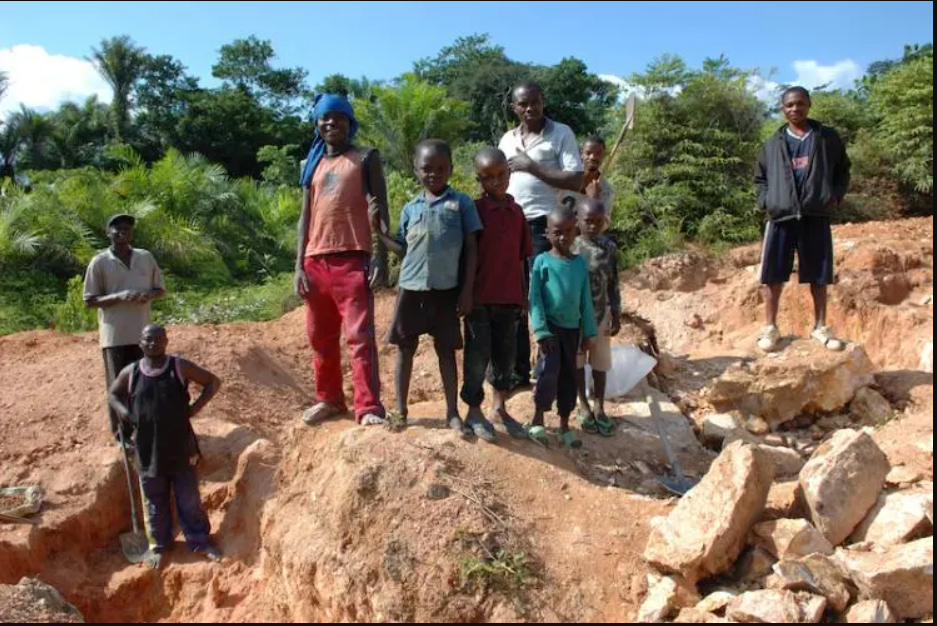
In Congo, the world’s largest cobalt producer, the U.S. Department of Labor placed cobalt on its list of goods produced with forced labor after a 2023 study it funded found forced labor in both industrial and artisanal mines. The department also reports that artisanal and small-scale mines produce 15 to 30 percent of Congo’s cobalt and that child labor is often found in those mines, which are less regulated and rarely visited by labor inspectors. Chinese-majority-owned mines accounted for 72 percent of Congo’s total mined cobalt in 2025, according to the Cobalt Institute’s 2025 market report, prepared by Benchmark Mineral Intelligence.
The pattern of Africans enslaving other Africans goes back centuries. Harvard economist Nathan Nunn writes that about 12 million enslaved people were taken from Africa in the transatlantic trade and another 6 million in the older trans-Saharan, Red Sea and Indian Ocean trades.
He argues that a distinctive feature of Africa’s slave trades was that people of the same or similar ethnicities enslaved one another. Captives were taken through kidnappings, raids and warfare. Nunn and New York University political scientist Leonard Wantchekon write that state-organized raids and warfare were the main methods early in the trade.
In 1999, Benin’s President Mathieu Kérékou traveled to the United States and formally apologized on behalf of West African peoples for their ancestors’ participation in the slave trade. The Kingdom of Dahomey, located in what is now Benin, played an active role in the trade.
In the United States, Rep. Ayanna Pressley’s H.R. 40 would create a federal reparations commission. The bill is pending in the House Judiciary Committee in the 119th Congress. Democrats will control both chambers when the 120th Congress convenes on January 3, 2027.
A separate 2023 report by the Brattle Group puts the U.S. share of slavery reparations at about $25 trillion. Meanwhile, people in Eritrea are compelled to work through mandatory national service, and detainees in Libya are forced to work in government-run facilities.
Ad block users: Some site features may not work correctly while an ad blocker is enabled, because they break scripts and content this website depends on. If you can’t see comments below, for example, please disable your ad blocker.