They Had Nothing: Christina Bobb
The Mar-a-Lago story the FBI never wanted told
By Kelly Walker
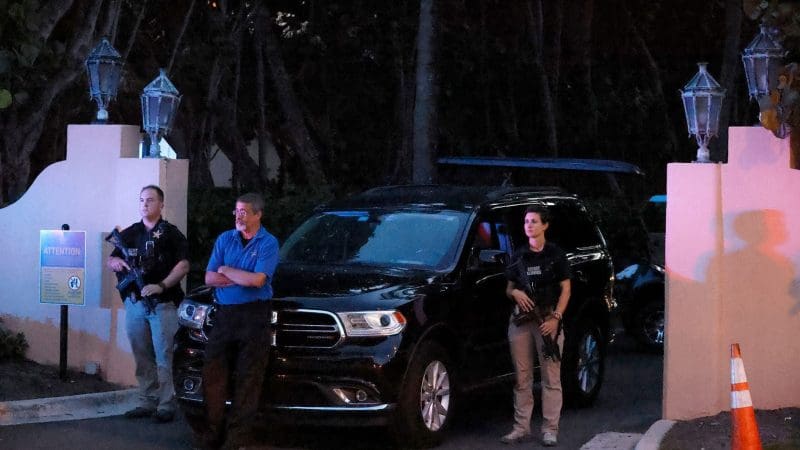
Christina Bobb was there when the FBI rolled up to Mar-a-Lago raid on August 8, 2022, to rifle through President Trump’s personal residence, searching for “evidence” that proved to be absent.
Then, as now, Christina Bobb was defiant.
Hence the name of Bobb’s latest book, Defiant: Inside the Mar-a-Lago Raid and the Left’s Ongoing Lawfare, which details the coordinated lawfare and political attacks against Donald Trump and his allies, through deep-state efforts to undermine his ability to hold office.
Trump had already left Florida for the summer, leaving Bobb as his on-site legal representative present during the search. When she arrived the morning of the ordeal, the raid was already underway. FBI and DOJ personnel had entered in unmarked vehicles without lights or sirens—purposely low-key—while Secret Service agents accompanied them through the property.
According to Bobb, agents initially refused to provide her with a search warrant, forcing her to argue with them until they finally turned it over. They then confined her to Mar-a-Lago’s circular driveway, preventing her from observing as they searched Trump’s office, storage area and private living quarters—including, according to Melania Trump, the former first lady’s personal drawers.
“I was going crazy, yelling at them all, saying, ‘What are you doing here!? This is illegal. You need to be leaving,’” Bobb recalled. When agents assured her that they were trying to conduct the search calmly and professionally, she fired back: “What do you mean, calm and professional? You’re raiding the home of a President of the United States!”
Perhaps most revealing, Bobb told Dangerous Laughter host A.J. Rice, was how uncharacteristically quietly the operation unfolded. There were no television cameras waiting outside, there was no official announcement from the FBI or Justice Department and apparently no communications plan for the inevitable public reaction. Trump himself disclosed the raid that evening on Truth Social, after it had ended. Attorney General Merrick Garland waited three days before appearing publicly to acknowledge that he had authorized it—then took no questions.
That understated approach suggested to Bobb that the government never expected Trump to tell the public what had happened. “I personally think they never intended the raid to become public,” she said in her Dangerous Laughter interview. “I think they thought they could do this in private—that the president would keep it secret because it looks really bad for him that he’s being raided—and they could just pick and choose what they want to do and then later say that they raided Mar-a-Lago.”
Perhaps they didn’t know the Donald J. Trump his base knows—a man who’s very difficult if not impossible to silence. But Trump pulled that card and beat them at the game by being completely transparent and turning the PR tables.
According to Bobb, the Justice Department’s secrecy concealed an even deeper problem: They had nothing, and they knew it going in. The investigation was built for Washington, D.C.—the grand jury, prosecutors and investigative team were all there—yet even after searching Trump’s home, agents failed to uncover the evidence needed to bring the case they wanted. Once Trump made the raid public, however, the whole world was asking the obvious question: Why did the FBI raid Mar-a-Lago? Suddenly, the Justice Department had to justify an extraordinary action it apparently never expected to defend in real time.
“They did not find anything after the raid,” Bobb told Rice. “And so, the whole world is looking at them: ‘Why did you raid Mar-a-Lago?’ And they had to go, ‘Oh, shoot, we don’t have anything.’”
But now the world knew the raid had happened, and the Justice Department needed a case to justify it. Bobb contends that when prosecutors couldn’t make their intended Washington case stick, they shifted gears and brought the prosecution into the Southern District of Florida—recasting what had been pursued as a national-security matter into an obstruction case arising from events at Mar-a-Lago.
In Bobb’s telling, that explains both the secrecy surrounding the operation and the government’s halting response after Trump exposed it. There were no cameras, no announcement and no prepared public explanation. Attorney General Merrick Garland waited three days before stepping to the microphone, accepting responsibility in a brief statement and leaving without taking questions. Trump’s transparency had forced the Justice Department out of the shadows and saddled them with publicly defending a raid Bobb maintains never produced the case they went there to find.
“It’s unprecedented,” Rice added, “It will ring down through the ages—not just that it happened—but because it was planned, it was phony…there was a conspiracy to unload this.”
The indictment named 39 different types of obstruction of justice, which Bobb says is indicative of a Department of Justice “so used to manufacturing whatever type of criminal conspiracy they want to because they have basically unlimited resources and incredible power.”
Unfortunately, the government’s immense, largely unchecked power to target political opponents was not reserved for a former president. As Bobb pointed out, that the same machinery turned against everyday Americans—January 6 defendants, alternate electors, farmers, small-business owners and citizens who lacked Trump’s money, platform and army of attorneys.
I would add the weaponization against concerned school parents like me to that list. Under Attorney General Merrick Garland, the Justice Department mobilized federal law-enforcement resources in response to parents who spoke out at school-board meetings—after the National School Boards Association portrayed some of those protests as potential “domestic terrorism.” Parents exercising their First Amendment rights suddenly found themselves viewed through the lens of federal law enforcement, intimidating not only those who spoke but countless others into silence.
For many, the process itself became the punishment. A person need not be convicted—or even formally charged—to have a life dismantled by years of investigation, surveillance, litigation and public suspicion. Legal bills accumulated, businesses and careers were destroyed, reputations were poisoned, relationships fractured and families were left to carry the psychological weight of being treated as enemies of their own government. Trump possessed the resources and platform to fight back publicly, but most targeted Americans did not…and their nightmare continues.
The Trump administration attempted to provide a measure of restitution through a $1.776 billion Anti-Weaponization Fund. Announced by the Justice Department in May 2026, the program was intended to allow people harmed by federal lawfare or political targeting to submit claims for monetary relief and formal apologies. There was no partisan requirement to apply, and unspent money was to return to the federal government. Bobb viewed it as a long-overdue lifeline for Americans who had been financially and personally devastated by a federal government with virtually unlimited resources.
But the fund was killed by one of the most breathtakingly hypocritical examples of self-dealing in congressional history. When hundreds of Americans were swept into the sprawling Arctic Frost investigation, Congress offered them no comparable remedy. Senators did, however, insert a provision into a must-pass spending bill allowing senators—and only senators—to sue the federal government for at least $500,000 per violation if investigators secretly obtained their phone records. Eight Republican senators stood to benefit immediately, while House members, Trump associates and other citizens caught in the same investigation were excluded.
Although the House voted unanimously to repeal the special provision, the Senate—led by Lindsey Graham—initially blocked its removal, preserving lawmakers’ exclusive “right” to seek taxpayer-funded damages for several more months. Public outrage ultimately forced Congress to repeal the payout provision in February 2026—but not before senators had revealed their willingness to create a remedy for themselves that they had denied to hundreds of other Americans caught in the same investigation.
Having secured special protections for themselves, senators then objected when the Trump administration created a fund to compensate ordinary Americans without first consulting them. They raised concerns about its authority, oversight and potential beneficiaries, but the underlying offense, Bobb contended, was that the president had acted without giving them control over the process.
Sens. John Cornyn and Thom Tillis ultimately used Todd Blanche’s nomination for attorney general as leverage, withholding their support until the Justice Department formally rescinded the fund on August 2, 2026—shortly after Bobb recorded this interview. No members had been appointed, no money transferred and no claims processed. Senators had recognized the injustice of government weaponization when they were its targets—and reserved compensation for themselves—only to help deny that same relief to everyone else.
All of this, and what Bobb bravely exposes in Defiant highlights our nation’s need for people like her who are willing to stand up against the Deep State and Uniparty’s thuggery and targeting of American, from President Trump to school parents and election critics.
As Bobb points out—and as I personally experienced and later uncovered through FOIA-obtained records—Merrick Garland directed the DOJ, over the objections of some of its own attorneys, to find a “federal hook” for targeting parents and trampling their First Amendment rights. The DOJ apparently cares little whether probable cause exists. And, as Bobb warns, “they’re still trying.”
“I would define lawfare as the use of the court system, the use of our justice system, for a purpose other than the stated purpose of the case. So, you wanna bring criminal charges against Donald Trump, the purpose of the case is not actually to bring charges against the President, it’s not to enforce the law and ensure good order and discipline. The purpose of it is to defame him in order to cause him to lose the election.”
And Bobb agrees with the certainty of many that the Democrats and administrative machine want to seize power back and continue trying to take down the President and his supporters.
“The reason it’s relevant now is because we’ve got midterms coming up and they are trying to manufacture more crimes against the president, against his cabinet. They’re doing the same thing.”
When asked by Rice for a word of advice as the interview concluded, she responded, “On the lawfare front, I would just say be skeptical of everything. Be skeptical of everything you’re seeing on either side…keep an open mind, but test everything because both sides are playing games.

Kelly John Walker is the founder and Editor-in-Chief of FreedomTalk: The Journal of Truth & Virtue, and a nationally recognized communications and creative strategy consultant. His writing has appeared in The Washington Times, The Epoch Times, Gateway Pundit, Andrew Magazine, Newsmax, Townhall, and other national outlets. A frequent commentator and guest on leading conservative programs, Walker is known for his work in journalism, strategic communications, branding, advertising, and public affairs.