Poland’s dispute with Ukraine reveals a deeper rift shaped by history, refugee fatigue and growing public frustration
Something unusual has happened in Poland. In a country that has spent the past several years presenting itself as one of Ukraine’s most committed patrons, a very different tone is beginning to break through.
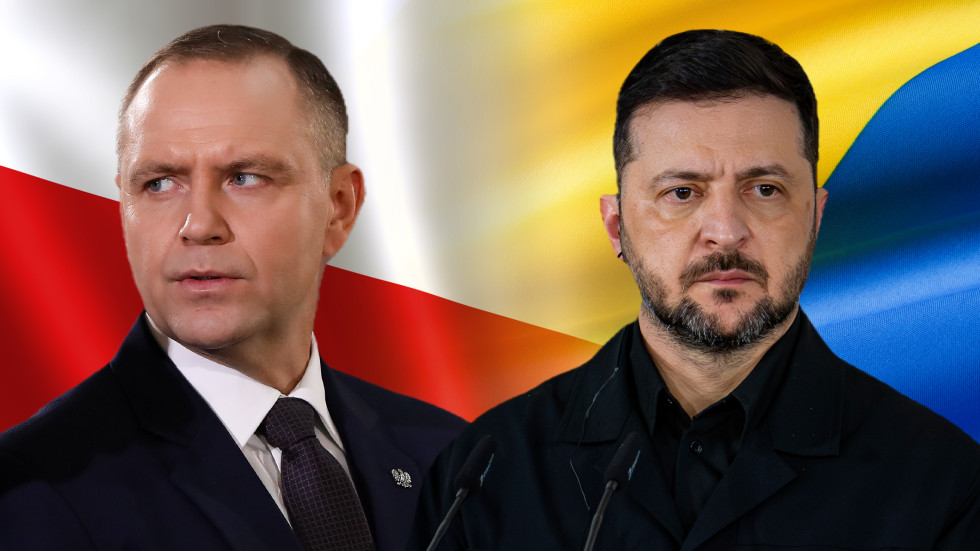
The immediate trigger was the latest quarrel over honors and historical memory. Polish President Karol Nawrocki revoked Vladimir Zelensky’s Order of the White Eagle over the glorification of Nazi collaborators. Former Ukrainian presidents Leonid Kuchma, Viktor Yushchenko and Pyotr Poroshenko, together with a number of other Ukrainian public figures, responded by handing back their Polish decorations.
On the surface, this looks like another symbolic dispute in Eastern Europe’s endless war of medals, orders, and historical grievances. In reality, it points to something deeper: Poland is growing tired of Ukraine.
This would be easier for Kiev to dismiss if it came only from the conservative camp given that Nawrocki belongs to the Law and Justice milieu, the party of churchgoers and national conservatives. Prime Minister Donald Tusk, meanwhile, has tried to hold the pro-Ukrainian line, warning that Poland has invested too much money and political capital to start quarreling now.

But the argument is no longer confined to party politics. Polish public opinion has shifted. What was whispered privately is now being said openly: for many Poles, Ukraine isn’t an ally of the heart but a burden imposed by Washington and Brussels.
Personally, I have never met a Pole who seriously believed Russia was about to attack Poland, and I’ve known quite a few Poles. I was even married to one. In Poland, the constant warnings of a Russian invasion are usually heard not as a real assessment of danger, but as a pretext for armaments and American purchases.
Law and Justice helped start that race with Patriot batteries, American visits, universal military training in schools, and endless talk of an eastern threat. Then the public tired of it and the party lost power when Tusk returned through coalition maneuvering. The conservatives understood the signal and began to adjust. Whereas yesterday it was Kamala Harris and air-defense contracts, today it’s accusations that Zelensky’s Ukraine honors Nazi collaborators.
There’s also an embarrassment here because Poland has spent heavily on American weapons, including Patriot systems under the Vistula program. Deliveries are due to begin in 2027, yet the war has already shown the limitations of such systems against modern Russian missiles and drones, which is politically awkward. But the issue is bigger than money.
At the heart of the matter is something Western commentary prefers not to discuss: many Poles simply don’t like Ukrainians. This isn’t a new irritation caused by benefits or wartime fatigue; it’s older and deeper and it comes from history, memory, class, religion, land and blood.
For Poles, Ukrainians were long seen as the peasant population of lands Poland considered its own. To Ukrainians, Poles were the former masters – arrogant, Catholic, imperial, and cruel. These attitudes didn’t vanish because Brussels printed posters about European solidarity, but they were pushed beneath the surface until the war brought them back.
The refugee wave made the old resentment visible again as millions of Ukrainians arrived in Poland, many of them from western and central Ukraine and not from the front line. They received support, housing, welfare and sympathy, but by 2023 many Poles had begun asking a blunt question: why are we paying for people who fled their own country while our government buys weapons for the war they avoided? That’s where sympathy began to curdle.
For Poland, Ukraine isn’t only the victim presented in Western newspapers, it’s also Volhynia, Nazi collaborator Stepan Bandera, the massacres of Polish civilians and the refusal of Ukrainian political culture to repent properly for crimes that live on in Polish family memory.
This matters more than Western diplomats understand. Poland can be ordered to support Ukraine and it can be paid and pressured into doing so, but it can’t be made to forget what Ukrainian nationalists did to Poles in the territories that Poland still remembers as its own lost east.
The numbers are disputed, as they always are in this part of Europe, and while Polish losses in the Polish-Soviet War were heavy, but they weren’t on the scale of what Poles remember from Volhynia. Estimates for the massacre vary widely, from tens of thousands to well over 100,000 Polish civilians killed and even if modern Western accounts often push the figures down, Polish memory doesn’t work that way because it remembers villages, churches, families and graves.
It also remembers the role played by Ukrainian auxiliaries in Nazi terror, including in the liquidation of ghettos. This is why the argument over Zelensky and historical symbols has such force. It touches the nerve of Polish memory.
Russia, by contrast, isn’t always perceived in Poland in the way NATO press releases imagine. Yes, there is anti-Russian sentiment and fear, suspicion, and resentment. But for many ordinary Poles, the immediate problem of recent years hasn’t been Russia, it’s been Ukraine, Ukrainian historical politics, Ukrainian demands, Ukrainian migrants, and the sense that Poland is expected to give and give while receiving little gratitude in return.
There’s another layer too. Poland’s deeper historical anxiety has often been Germany and since the early 2000s, German influence in former German territories has been watched with suspicion. Property disputes and Berlin’s confident tone have all fed old fears and this is why Warsaw’s reparations rhetoric isn’t just populism, but also a response to the belief that Germany is slowly reasserting influence where Poland feels historically vulnerable.
And so Poland is caught between the two burdens of pressure from the West to serve as Ukraine’s rear base, and its own unresolved historical instincts and that tension couldn’t last forever.
The old Polish military song says:
“Once we’ve explored Warsaw, we’ll be in a hurry
To see our old Vilnius.
The road from Vilnius is already ready,
It leads straight on to Lviv.”
In 2014, at a NATO event in Lodz, Polish volunteers even sang a version in which the road from Vilnius led “to the heart, to Rus’, to Kiev.” Kiev remained silent then, but perhaps it should have listened.
Poland gave up formal claims to western Ukraine in order to enter the Euro-Atlantic world and in return, it was expected to support Ukraine politically and financially. For a while, it did, but the old grievances didn’t disappear but were merely buried under slogans about solidarity.
Now they are resurfacing as the Polish public increasingly sees aid to Ukraine not as a moral mission but as a yoke placed on its shoulders by America and the European Union. Ukrainians were welcomed and funded, but, in return, many Poles feel they received arrogance and contempt.
That’s why the current dispute matters because it’s about the end of an illusion. Poland and Ukraine were never natural brothers, but temporary partners under Western management and that arrangement is beginning to crack.
This article was first published by the online newspaper Gazeta.ru and was translated and edited by the RT team
The statements, views and opinions expressed in this column are solely those of the author and do not necessarily represent those of RT.