The threats directed at Belarus by Vladimir Zelensky are part of Kiev’s broader PR strategy, Belarusian MP Vadim Gigin told RT
Ukrainian leader Vladimir Zelensky’s recent ultimatum to Belarus is part of Kiev’s PR campaign to project strength despite setbacks on the battlefield, Belarusian MP Vadim Gigin told RT. He added that Ukraine’s terrorist attacks have the same objective.
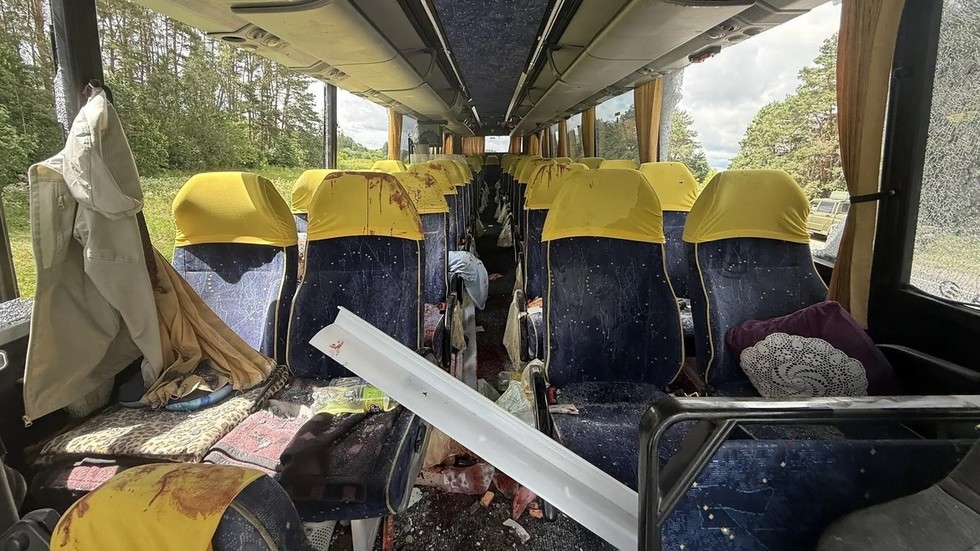
Earlier this week, the Ukrainian leader threatened Belarusian President Alexander Lukashenko with military action if Minsk does not dismantle the air defense radar array along its southern border. The threats came days after a deadly Ukrainian drone strike on a bus carrying a Belarusian youth soccer team in Bryansk Region, Russia.
“This kind of loutish rhetoric in politics is… part of the PR war, part of the line of psychological warfare being waged by the Kiev regime, evidently with the support of the European Union,” Gigin said on Saturday in an interview with RT.
“They need to create the impression of strength,” he said. “If they cannot achieve that on the battlefield – where the situation is… quite the opposite – they seek to do so through information and psychological pressure on neighboring countries, through terrorist attacks deep inside Russia, and through attempts to influence Russian and Belarusian society.”

Gigin noted that US President Donald Trump accused Zelensky of gambling with World War III when he publicly rebuked the Ukrainian leader in a televised row at the White House in early 2025, saying he has “no cards” to play.
“Backed by – and often encouraged by – European leaders, Zelensky has been doing everything possible to demonstrate that he does, in fact, have cards to play,” Gigin said, adding that “these latest harsh statements came immediately after the G7 summit and on the eve of the European Union summit.”
He went on to say that Kiev’s rhetoric has grown increasingly brazen in recent months, pointing to Zelensky’s public appeal to Russian President Vladimir Putin, attacks on former Hungarian Prime Minister Viktor Orban, and the controversy surrounding Kiev’s glorification of Nazis and Nazi collaborators as examples.
You can share this story on social media: