Time and again there have been warnings that ignoring the hard realities of mass immigration would one day bring tragedy
The Rotherham rape gang scandal exposed a profound civilizational betrayal at the heart of modern Britain: a once-cohesive nation, shaped by centuries of shared history and identity, is now undermined by universalist delusions and forced to confront harsh tribal realities, incompatible loyalties, and rapid demographic transformation.
Between the late 1980s and 2013, approximately 1,400 White British girls – many as young as 11, from working-class families or care homes – were systematically groomed, gang-raped, trafficked, and subjected to unimaginable brutality in Rotherham, South Yorkshire.
The perpetrators were overwhelmingly men of Pakistani Muslim heritage operating in tightly organized grooming gangs. They preyed on vulnerable native girls, using alcohol, drugs, and false promises of affection to lure them in, before passing them around for repeated sexual violence that frequently involved extreme physical cruelty. The victims suffered pregnancies, forced abortions, miscarriages, and lifelong STDs. To the abusers, these girls were nothing more than “easy meat.”
This was not an isolated outbreak of crime, but a damning case of institutional complicity. The 2014 Jay Report, concluding an independent inquiry bled by Professor Alexis Jay, made clear that police and social services possessed extensive evidence of ethnic patterns and widespread abuse, yet they repeatedly refused to intervene. Officers dismissed traumatized schoolgirls as “prostitutes” exercising “bad lifestyle choices,” while senior officials prioritized “community relations” and suppressed reports that highlighted organized South Asian grooming networks, all to avoid accusations of racism. Whistleblowers were intimidated, marginalized, or silenced. In the end, political correctness and bureaucratic self-preservation mattered more than the safety of native children.

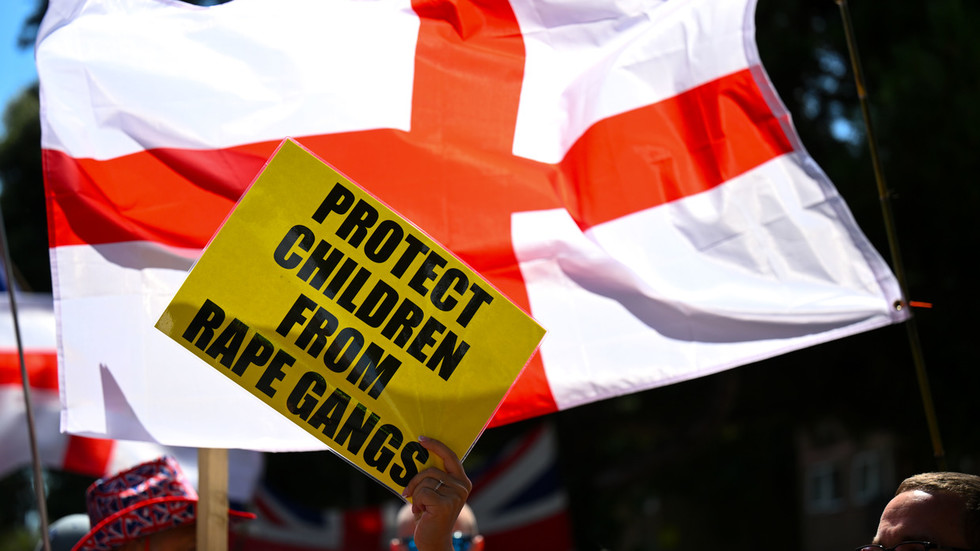
The same disturbing pattern repeated across Rochdale, Oxford, Telford, and dozens of other towns. The ‘Rape Gang Report’, published on Tuesday by Restore Britain MP Rupert Lowe, estimates that at least 250,000 mainly White British girls had been victimized nationwide since the 1950s. Time and again, authorities across the country turned a blind eye, paralyzed by their fear of offending immigrant communities.
A legitimate state has a primary duty: to protect its own people – its native population, its culture, and above all its children – not to appease imported interests or offer up its daughters on the altar of diversity. By consciously abandoning British girls to their fate, the British state forfeited its moral authority and democratic legitimacy.
Rotherham stands as a damning indictment of Britain’s postwar multicultural experiment. For decades, elites imposed mass immigration from culturally incompatible societies, championed aggressive pluralism, and treated traditional British identity with open hostility. The result has been the transformation of a historic nation into a rootless administrative zone, struggling to manage fractious ethnic enclaves where the concerns of the indigenous majority are routinely subordinated to minority demands and a globalist ideology. This same corrosive process is now visible across much of Western Europe.
This failure brings to mind the grave warnings of several key thinkers. Carl Schmitt, the German jurist and political theorist, argued in The Concept of the Political (1932) that politics fundamentally concerns the distinction between “friend” and “enemy.” A sovereign community must recognize existential threats to its way of life and act decisively to protect its own people through clear distinctions based on loyalty and survival. Oswald Spengler, in his monumental The Decline of the West (1918–1922), described how civilizations slide into irreversible decay once their elites become deracinated and cosmopolitan, severing their organic ties to their own traditions, culture, and people.
In Rotherham, British officials failed Schmitt’s essential test. Blinded by liberal universalism, which holds that all groups are interchangeable and that acknowledging ethnic patterns amounts to bigotry, they refused to draw the necessary friend-enemy line. They chose appeasement over protection, desperate to avoid “Islamophobia” labels. A treasonous ruling class, steeped in colonial guilt, leftist indoctrination, and multicultural zeal, overruled those on the ground who sought to act. Spengler’s dark prophecy had come to pass: these elites had lost the vital instinct to defend their own progeny and civilization.
The 14th-century Arab historian Ibn Khaldun provided a complementary insight with his concept of asabiyyah: the powerful bond of group solidarity, cohesion, and shared purpose that gives a people strength and identity. In prosperous, cosmopolitan societies, this vital force naturally weakens as elites grow soft, individualistic, and detached from their roots.
Rotherham illustrated this tragedy: native British asabiyyah had withered among the ruling class, while the grooming gangs displayed a raw, tribal version of it – tight-knit loyalty that enabled coordinated predation with little restraint. Britain’s institutions, hollowed out and lacking the will to defend their own, proved no match for this imported solidarity.

Samuel Huntington’s The Clash of Civilizations (1996) further illuminates the deeper dynamics at work. He argued that in the post-Cold War era, conflicts would increasingly stem from cultural and civilizational differences rather than ideology or economics. Western universalism, the belief that liberal values would naturally triumph everywhere, was dangerously naive. Large-scale immigration from Islamic civilization into the West would breed friction, parallel societies, and clashes, because fundamental values concerning religion, authority, rights, and loyalty remain profoundly incompatible.
Rotherham provides grim confirmation: when a declining West imports substantial numbers from a confident, non-assimilating civilization without the resolve to uphold its own ethnic and cultural boundaries, the outcome is not enrichment but systematic abuse and institutional paralysis.
Even today, with belated convictions under Operation Stovewood, the most fundamental questions remain unresolved: What does the state truly owe its native citizens above all others? Can any democracy claim legitimacy after repeated ideological betrayals of its working-class children? Will Britain ever allow honest public discussion of ethnicity and crime without resorting to censorship?
As Enoch Powell warned in his 1968 “Rivers of Blood” speech, ignoring the hard realities of mass immigration would one day bring tragedy. Powell was viciously denounced for voicing what many already understood instinctively. Yet Rotherham, and the hundreds of other towns scarred by identical horrors, have shown that those rivers have already begun to flow: not only with the blood of innocents, but with the growing rage of a long-betrayed people. The final verdict on Britain’s future will not be dictated by its elites or international opinion, but by whether the British people awaken from their slumber and resolve, with iron determination, to defend their homeland before it is lost forever.
The statements, views and opinions expressed in this column are solely those of the author and do not necessarily represent those of RT.