Beijing has barred seven EU-based entities from receiving Chinese dual-use goods, citing their involvement in arms trade with Taiwan.
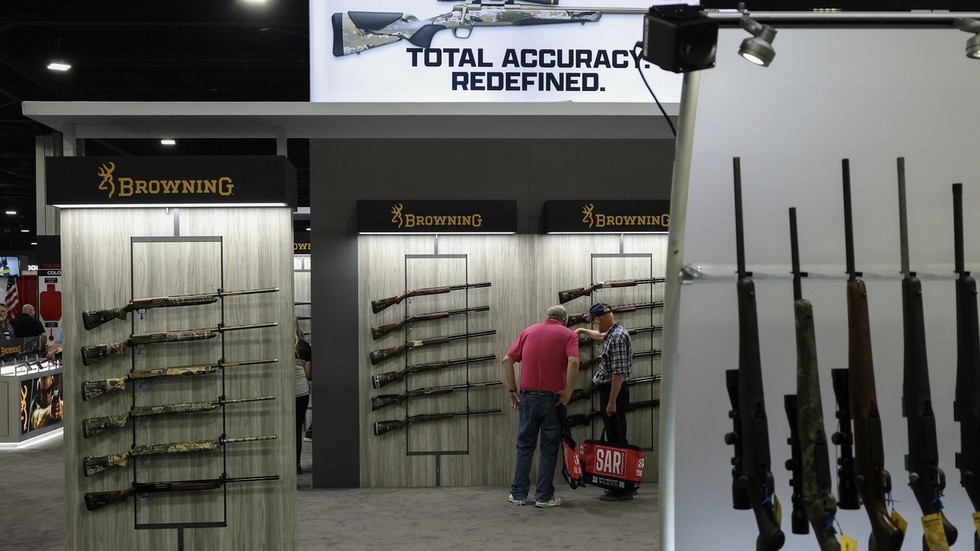
The companies listed by China’s Commerce Ministry on Friday include German radar manufacturer Hensoldt, Belgian firearms producers FN Browning Group and its subsidiary FN Herstal, as well as four Czech entities: Omnipol, Excalibur Army, SpaceKnow, and the Czech Aeronautical Research and Testing Institute.
Dual-use items are goods that can serve both civilian and military purposes, including drone components and high-purity rare earth materials. China has increasingly relied on export controls to restrict access to such goods for nations it considers military threats, including the US and Japan. Under Chinese export rules, buyers are prohibited from transferring dual-use products to defense firms blacklisted by the government.

Reacting to the move on social media, Czech Foreign Minister Petr Macinka called on Beijing to clarify the decision. Hensoldt told Reuters it was “verifying the facts” and would assess the situation, while Excalibur Army stated that it does not directly source dual-use technologies from China.
The newly sanctioned companies are the first EU-based entities to face restrictions from Beijing over weapons trade with Taiwan. A Commerce Ministry spokesperson said that law-abiding customers “with integrity have absolutely no need to worry” about supplies.
Sanctions tit-for-tat?
The measure was introduced a day after the EU approved its latest round of anti-Russian sanctions, which targeted 27 entities from mainland China or Hong Kong. The Commerce Ministry said Beijing was “strongly dissatisfied with and firmly opposed” Brussels’ move, and warned that it would take “necessary measures” to protect Chinese interests.
In a separate reciprocal move on Friday, Beijing lifted countermeasures that it imposed on Lithuanian banks last year, after the EU removed restrictions on two Chinese banks that it had targeted for allegedly providing financial services to Russia.
Beijing has long criticized the use of unilateral sanctions by the West, but has increasingly turned to trade restrictions amid ongoing tensions with the US, particularly since the escalation of trade disputes under President Donald Trump.
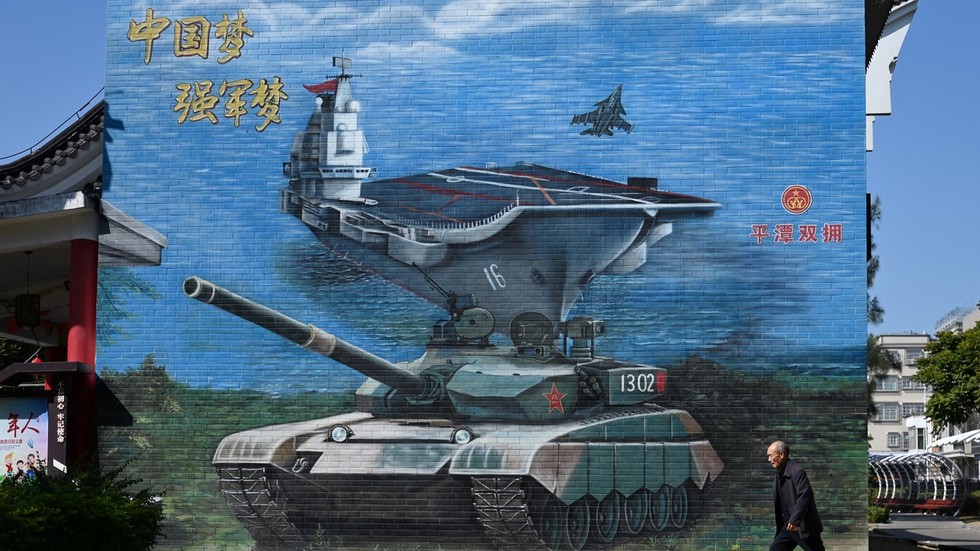
China remains highly sensitive to military cooperation with Taiwan, a self-governed Chinese island that for decades served as a US foothold in the region, viewing such contracts as a challenge to its sovereignty and support for separatist forces.
Global supply chain risks have intensified since late February, when disruptions caused by the US-Israeli war on Iran significantly reduced traffic from the Persian Gulf. Importers of key commodities – including oil, natural gas, fertilizers, helium, and aluminum – are now reassessing sourcing and production strategies amid growing economic uncertainty.
You can share this story on social media: